

UK VAT Compliance for Non-Residents: MTD, Returns & Deregistration
Understanding UK VAT Compliance for Non-Resident Businesses
What UK VAT Compliance Means Once You Are Registered
Once you have a UK VAT number, HMRC expects you to operate like any other VAT-registered trader — even if your team is overseas. In practice, “compliance” means you must:
- keep proper VAT records (digitally, under MTD rules)
- account for VAT correctly on sales and purchases
- file VAT returns on time
- pay VAT by the deadline (with enough time for funds to clear)
- keep import/customs evidence aligned to your VAT return
- respond quickly to HMRC questions and evidence requests
MTD requires VAT-registered businesses to keep digital records and submit VAT returns using compatible software. – https://www.gov.uk/government/publications/vat-notice-70022-making-tax-digital-for-vat/vat-notice-70022-making-tax-digital-for-vat
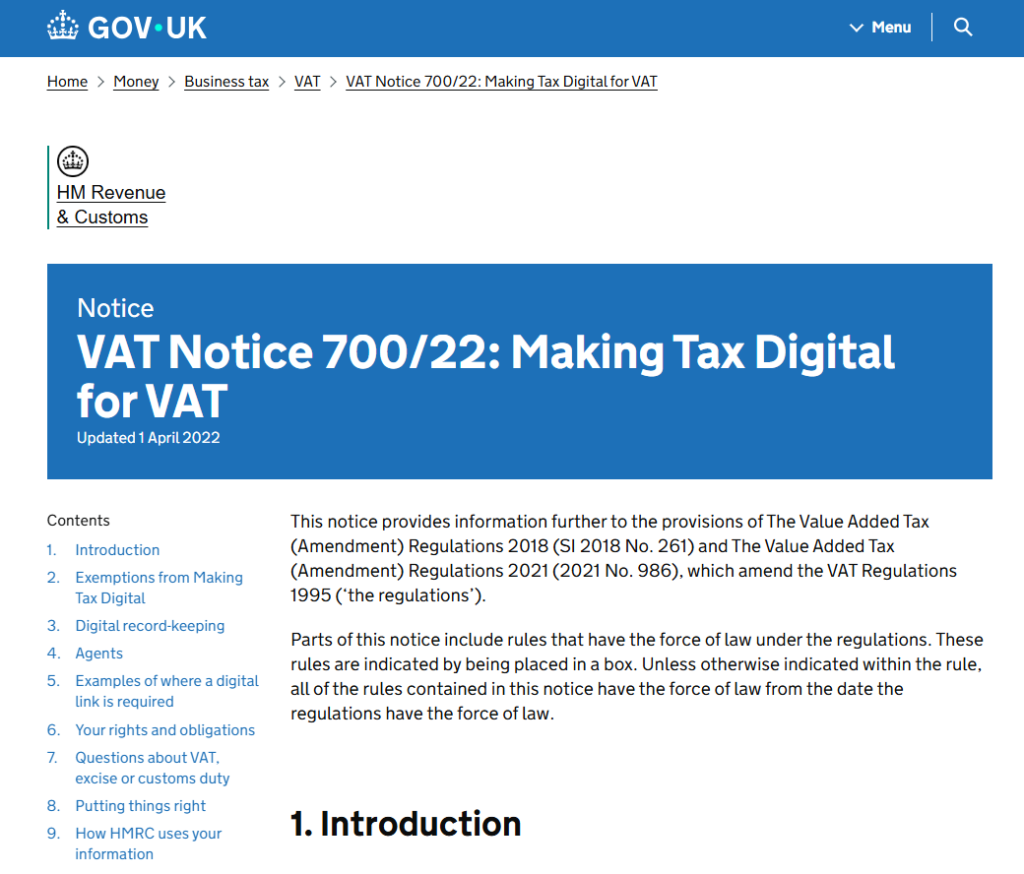
Understanding the requirements for UK VAT Compliance is crucial for non-resident businesses operating in the UK.
Key Obligations for Overseas Businesses with a UK VAT Number
For non-residents, the “core obligations” usually break into five operational blocks:
- Correct VAT treatment: UK VAT rates / reverse charge / place of supply
- Invoices and evidence: VAT invoices (where required) + audit trail
- MTD setup: digital records + software submission
- Returns and payments: filing deadlines + bank timing
- Imports: importer of record clarity + PVA reporting + statements
If you registered recently, remember: correct compliance depends on having registered at the right time.
Internal link: when a non-resident must register for UK VAT
Internal link: how to apply for UK VAT registration as a non-resident
Why Non-Resident Status Makes Compliance More Complex
Overseas businesses can be fully compliant — but the operational risk is higher because of:
- time zones (deadlines hit UK time, not your local time)
- foreign currencies and exchange-rate consistency
- supply chains with multiple parties (marketplace, fulfilment, customs agent)
- evidence held outside the UK (and sometimes not in English)
- “deemed supplier” models where VAT responsibility varies by transaction type
- higher HMRC verification sensitivity for overseas traders (“HMRC overseas” risk lens)
Filing UK VAT Returns from Abroad
This section targets: filing UK VAT return from abroad.
What Information Must Be Included in a UK VAT Return
Your VAT return should reflect, at a minimum:
- Output VAT: VAT on UK taxable sales where you are the supplier
- Input VAT: VAT you are reclaiming on UK business purchases (subject to rules)
- Import VAT: either paid at import or accounted for via PVA
- Adjustments/corrections: error corrections, bad debts, partial exemption impacts (where relevant)
- Supporting records: sales and purchase ledgers, import statements, reconciliations
Practical best practice for overseas teams: build a “VAT return pack” each quarter:
- sales summary by channel (Amazon/Shopify/B2B invoices)
- purchase summary (fees, storage, marketing, professional services)
- import evidence (CDS statements / postponed import VAT statements where relevant)
- bank reconciliation and unusual-event notes (large shipment, one-off contract, returns spike)
That pack makes HMRC queries much easier to answer.
Filing Deadlines and Payment Dates for Non-Resident Businesses
UK VAT filing is deadline-driven. The online submission deadline is usually one calendar month and 7 days after the end of the VAT period — and this is also generally the deadline for paying HMRC, with the key point that you must allow time for your payment to clear – https://www.gov.uk/submit-vat-return
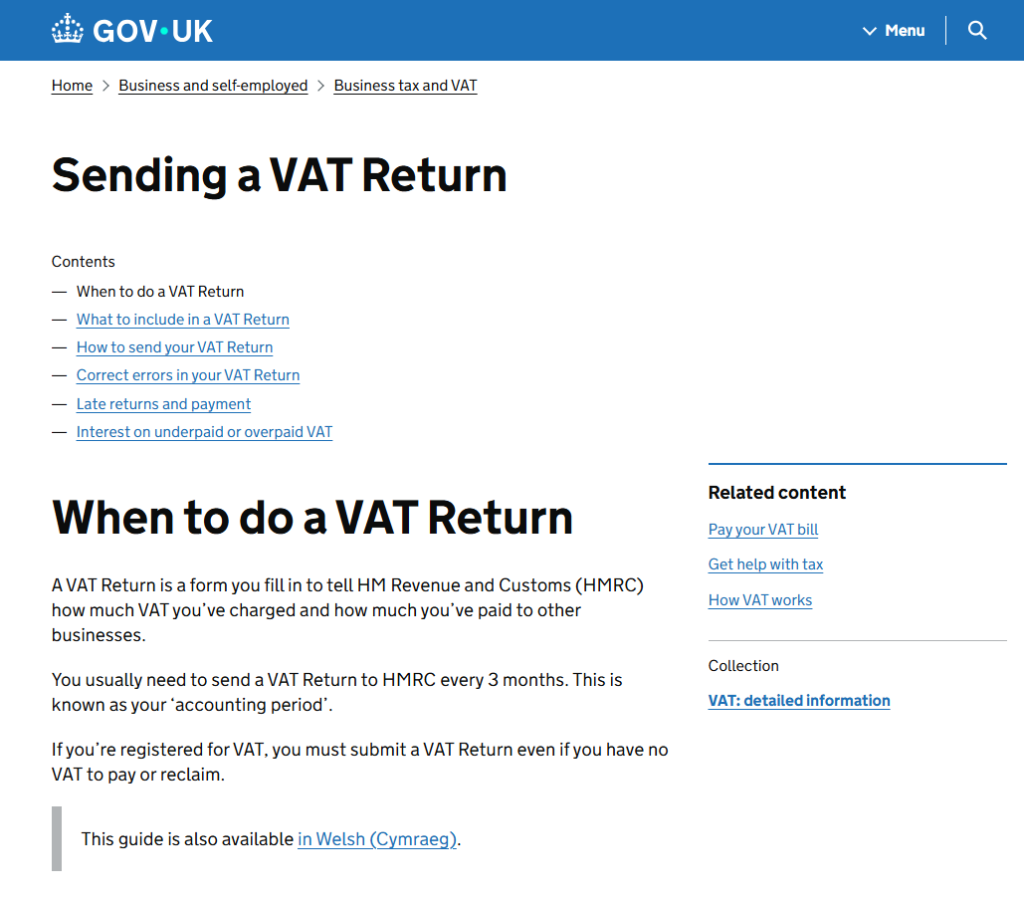
For non-residents, the practical risk is not the rule — it’s international banking time. If you pay from abroad, plan early and keep proof of payment.
How to File UK VAT Returns from Overseas in Practice
To file from overseas, you typically need:
- access to HMRC via compatible software (MTD submission)
- a clean digital record set that feeds the return
- a defined owner for approvals (internal finance lead vs UK adviser)
- a process for collecting documents from marketplaces/3PL/customs agents on time
Many overseas businesses choose to file via a UK VAT agent or representative to reduce operational burden.
Internal link: UK tax representative for non-resident VAT compliance
Common Errors in VAT Returns Filed by Non-Residents
The patterns HMRC commonly challenges include:
- inconsistent currency conversion (mixing rates / periods)
- reclaiming import VAT without matching import evidence
- misclassifying sales as zero-rated/exempt without support
- treating marketplace settlements as “sales invoices” without a proper mapping
- missing adjustments when business model changes mid-quarter (new fulfilment route, new channel)
Making Tax Digital (MTD) for VAT – Non-Resident Perspective
Primary keyword focus: mtd for vat non resident.
Overview of MTD Requirements for UK VAT
MTD for VAT requires VAT-registered businesses to:
- keep VAT records digitally
- use MTD-compatible software to submit VAT returns
- maintain a digital audit trail (not manual retyping into HMRC portals)
This is HMRC’s baseline requirement for VAT compliance.
MTD for VAT Non-Resident Businesses: Who Must Comply and When
If you have a UK VAT number, MTD obligations typically apply regardless of where you are established. HMRC has indicated that new VAT-registered businesses are signed up to MTD automatically unless exempt.
Practical takeaway: if you are non-resident, don’t assume you can “file manually” — build your MTD approach from day one.
Digital Record-Keeping and Bridging Software
Digital records should be sufficient to support every VAT return number. In practice, that means:
- sales and purchase data stored digitally
- VAT codes and rates applied consistently
- links from source records → VAT return totals (a traceable audit trail)
If your accounting is spreadsheet-driven or held in a non-UK system, bridging software can connect digital records to MTD submission — but your underlying records must still be clean and consistent.
Practical Set-Up for Overseas Companies
A reliable overseas setup usually includes:
- a single “source of truth” for sales (often your accounting system, fed by marketplace reports)
- a fixed exchange-rate policy (e.g., HMRC accepted method, applied consistently)
- defined cut-off procedures (what counts in which VAT period)
- clear ownership: who reviews/approves returns and who holds the Government Gateway linkages
- secure cloud document storage for evidence retrieval during HMRC checks
Penalties for Non-Compliance with MTD
MTD failures generally create:
- late filing risk (if the software link breaks or access is wrong)
- compliance flags that can slow VAT refunds and increase HMRC scrutiny
- operational disruption (returns rejected, rework required)
Treat MTD like infrastructure — not admin.
Import VAT and Postponed VAT Accounting (PVA)
Secondary focus: postponed VAT accounting, import VAT UK / import VAT UK non resident.
How Import VAT Works for Non-Resident Businesses Trading with the UK
Import VAT arises when goods enter the UK customs territory. It is separate from domestic output VAT on UK sales. Key operational questions are:
- who is the importer of record
- whose EORI is used in declarations
- where goods are cleared and stored
- how import VAT is accounted for (paid upfront vs PVA)
If you reclaim import VAT, HMRC will expect matching customs evidence.
Postponed VAT Accounting (PVA) – Concept and Benefits
PVA allows businesses to account for import VAT on their VAT return rather than paying it upfront at the border, helping cash flow — particularly for high-volume importers and e-commerce sellers. HMRC maintains current guidance on using PVA to account for import VAT on your VAT return.
Conditions for Using PVA as a Non-Resident
PVA is practical, but not “automatic”. You need:
- the right import declarations and statements
- accurate VAT return entries
- reconciliation between import data and accounting records
You also need access to the relevant systems to retrieve postponed import VAT statements.
Internal link (e-commerce context): VAT rules for Amazon FBA and e-commerce sellers
Documentation You Need for Import VAT and PVA
For overseas businesses, import VAT support often overlaps with “tax document hygiene”. Expect to maintain:
- customs declaration references and import entries
- postponed import VAT statements (where PVA used)
- commercial invoices and shipping docs
- duty and freight breakdowns (where relevant)
- reconciliations tying import VAT → VAT return → accounting system
This is where LSI terms like tax documents UK, UK tax document, and “HMRC overseas evidence” become practical: if you cannot produce the documents quickly, refunds and reclaims are likely to be delayed.
Common Mistakes with Import VAT and PVA
The big failure modes are:
- reclaiming import VAT without the correct statement/evidence
- confusing import VAT with domestic VAT on sales
- poor linkage between customs agent data and accounting records
- posting imports in the wrong VAT period (timing mismatches)
UK VAT Refunds and Overseas VAT Reclaim
This section targets: UK VAT refunds for non residents, overseas VAT reclaim, reclaiming overseas VAT, foreign VAT reclaim.
Reclaiming UK VAT via Your VAT Returns
If you are VAT-registered in the UK, you normally reclaim UK input VAT through your VAT returns (subject to normal rules). The two operational drivers for non-residents are:
- invoice quality (proper VAT invoices, supplier details, VAT numbers)
- a clear link between the costs and your taxable business activity
Overseas VAT Reclaim – How It Interacts with UK VAT
Many international groups have VAT costs in multiple countries. “Overseas VAT reclaim” usually refers to reclaiming VAT incurred outside your home jurisdiction (often through refund schemes or local registrations).
Key point: UK VAT returns only reclaim UK VAT (and import VAT accounted for under UK rules). If you have VAT incurred in other countries, that is a separate “foreign VAT reclaim” process and should be tracked separately to avoid mixing evidence and claims.
Evidence Required to Support VAT Refund Claims
To support reclaims and reduce HMRC delays, keep:
- VAT invoices and receipts (readable, complete)
- contracts showing business purpose
- import documentation (if import VAT reclaimed)
- reconciliation packs tying the VAT return numbers to source evidence
Why HMRC May Refuse or Delay VAT Refunds
Common reasons include:
- weak or missing evidence
- inconsistencies between sales activity and claimed input VAT
- import VAT not supported by correct statements
- returns filed late or repeated errors triggering risk checks
A disciplined “VAT return pack” often makes the difference between smooth refunds and repeated queries.
Deregistration: When and How to Close Your UK VAT Number
When You Can or Must Deregister for UK VAT
You can usually deregister when you stop making UK taxable supplies and do not expect to restart soon. For non-residents, triggers often include:
- ending UK stockholding and fulfilment
- stopping UK domestic sales
- completing a UK project/trade activity
- restructuring the trading entity
HMRC explains when you must, or can ask to, cancel your VAT registration.
The Deregistration Process for Non-Resident Businesses
Deregistration typically involves submitting form VAT7 and stating the reason and requested cancellation date. HMRC’s VAT Notice 700/11 guidance references VAT7 for cancelling a VAT registration.
Final VAT Return and Adjustments
Your final VAT return often needs extra care because you may need to consider:
- stock on hand at deregistration
- business assets
- final adjustments (depending on your circumstances)
If you deregister too early but continue making UK taxable supplies (for example, through a marketplace arrangement you didn’t fully map), HMRC can challenge the position.
Consequences of Deregistration and Common Pitfalls
After deregistration:
- you cannot issue VAT invoices as a VAT-registered supplier
- record retention still applies
- HMRC may offset refunds against final liabilities
- re-registration later can trigger enhanced scrutiny
Working with HMRC from Overseas
Communication Channels with HMRC for Non-Resident Businesses
Overseas businesses typically interact via:
- MTD software submissions and digital services
- written correspondence
- agent/representative channels (often more efficient)
This is where broader UK taxation for non-residents context matters: compliance is not just “VAT rules”, but managing remote evidence, timelines, and HMRC response expectations.
Handling HMRC Queries, Checks and Audits from Abroad
A good remote-audit process includes:
- a document index (where everything is stored)
- standard “explainers” for supply chain, imports, and marketplace models
- quick access to contracts, warehouse agreements, and customs statements
- a single point of contact to coordinate responses
Internal link: UK VAT compliance for companies with foreign directors (if relevant to your structure)
Record-Keeping and Retention Periods
Keep VAT records in a secure, accessible format (often cloud-based). If documents originate in another language, be prepared to provide English explanations/translations for HMRC review.
Compliance Checklist for Non-Resident UK VAT Registrants
Monthly / Quarterly Tasks
- Collect platform and payment reports (Amazon/marketplaces/Shopify/PSPs)
- Reconcile sales channels to accounting records
- Reconcile import documentation (customs entries / PVA statements)
- Validate VAT rate/place-of-supply logic for new products/services
- Prepare the quarterly VAT return pack
- File return and schedule payment early enough to clear HMRC
Annual and Ad-Hoc Compliance Tasks
- Review whether your business model changed (new warehouse, new import route, new marketplace channel)
- Check whether VAT registration remains necessary or deregistration is appropriate
- Review import VAT method (upfront vs PVA) and evidence completeness
- Refresh internal controls: who approves VAT returns, who controls VAT settings on platforms
When to Review Your UK VAT Position with an Advisor
Consider a review if you:
- start holding stock in a new location
- expand into new channels (marketplace → own store, or add B2C digital)
- move from simple exports to imports into the UK
- begin claiming regular VAT refunds
- receive HMRC queries or repeated payment allocation issues
Internal link: UK tax representative for non-resident VAT compliance
FAQs – UK VAT Compliance for Non-Residents
Does Making Tax Digital apply to non-resident VAT registrations?
In most cases, yes. MTD requires VAT-registered businesses to keep digital records and submit VAT returns using compatible software, and HMRC indicates that VAT-registered businesses are brought into MTD unless exempt.
What is the deadline for filing a UK VAT return from abroad?
The online filing deadline is usually one calendar month and 7 days after the VAT period ends, and payment is typically due by the same deadline — so overseas businesses should allow extra time for international transfers.
How do I file UK VAT returns from overseas in practice?
You’ll need MTD-compatible software and clean digital records. Many overseas businesses file through a UK VAT agent for smoother HMRC communication and to reduce operational risk.
What is postponed VAT accounting (PVA) and why does it matter?
PVA is a method of accounting for import VAT on your VAT return rather than paying it upfront at import, which can improve cash flow for import-heavy models. HMRC provides guidance on using postponed VAT accounting.
Why are UK VAT refunds sometimes delayed for non-residents?
Delays often result from missing or inconsistent evidence, import VAT claims without the correct statements, or compliance flags from late filing/errors. A structured VAT return pack reduces queries.
How do non-resident businesses deregister from UK VAT?
Deregistration commonly uses form VAT7 and requires a final VAT return and careful treatment of stock/assets at the end of registration. HMRC covers cancellation in VAT Notice 700/11.
Where can I find more detailed step-by-step information?
Use the cluster guides linked:
- UK VAT Registration for Non-Residents and Foreign Companies: The Ultimate Guide
- Eligibility & Thresholds: When Must a Non-Resident Register for UK VAT?
- Documents for UK VAT Registration: Checklist for Foreign Companies
- Tax Representatives & Agents: Mandatory Requirements and Costs
- E-commerce & Digital Sellers: VAT Rules for Amazon FBA and Marketplaces
- MTD for VAT & Returns for Non-Residents: UK Compliance Guide
- UK Companies with Foreign Directors: A Specific VAT Registration Guide
How Audit Consulting Group Can Help
Non-resident VAT compliance is mostly a systems problem: digital records, repeatable processes, clean evidence, and predictable timelines — especially when you operate across marketplaces, imports, multiple currencies, and time zones.
Audit Consulting Group supports overseas businesses with end-to-end UK VAT compliance, including:
- MTD for VAT (non-resident) setup and software guidance
- Quarterly VAT return preparation and review
- Import VAT and postponed VAT accounting reconciliation
- Managing HMRC queries, checks, and refund delays
- Deregistration planning and final VAT return support
- Practical controls for e-commerce, fulfilment, and digital service models
Audit Consulting Group – Accounting and Tax
+44 7386 212550
info@auditconsultinggroup.co.uk
If you want, we can review your current VAT process (records, imports, platforms, and returns) and give you a clear compliance plan that works from abroad — without unpleasant HMRC surprises.