
Leave your details and our team will get back to you shortly.
HMRC SA370 – Appeal Against Self Assessment Penalties
If HMRC has issued you with a Self Assessment late filing or late payment penalty, you may be able to challenge it where the penalty was issued incorrectly or where you had a reasonable excuse for missing the relevant deadline.
HMRC form SA370 is used by individuals to appeal certain Self Assessment penalties. The form itself is relatively straightforward; the more important part is explaining the grounds for appeal clearly, setting out the relevant dates and providing supporting evidence where available.
Audit Consulting Group can review your penalty notice, assess the circumstances, help establish the appropriate grounds and prepare a structured appeal for submission to HMRC. We can also assist with subsequent HMRC correspondence where this forms part of the agreed service.
What Is HMRC Form SA370?
SA370 is HMRC’s paper appeal form for individuals who want to challenge a Self Assessment late filing penalty, late payment penalty, or both.
You may be appealing because HMRC’s records are incorrect, because you believe the penalty should not have been issued, or because circumstances outside your control prevented you from meeting the filing or payment deadline.
HMRC does not cancel penalties simply because an appeal has been submitted. It considers the facts of the case, the timing of events and the explanation provided.
When Should You Use SA370?
SA370 may be appropriate where you are an individual and have received a Self Assessment penalty that you believe should be reconsidered.
Typical situations include serious illness or hospitalisation close to a filing deadline, bereavement, a genuine HMRC online service failure, loss of important records following fire, flood or theft, or another unexpected event that directly prevented you from filing or paying on time.
An appeal may also be appropriate where the issue is factual rather than a reasonable excuse. For example, you may believe a return was filed on time, HMRC may have recorded information incorrectly, or there may be a question over whether a return was required for the period concerned.
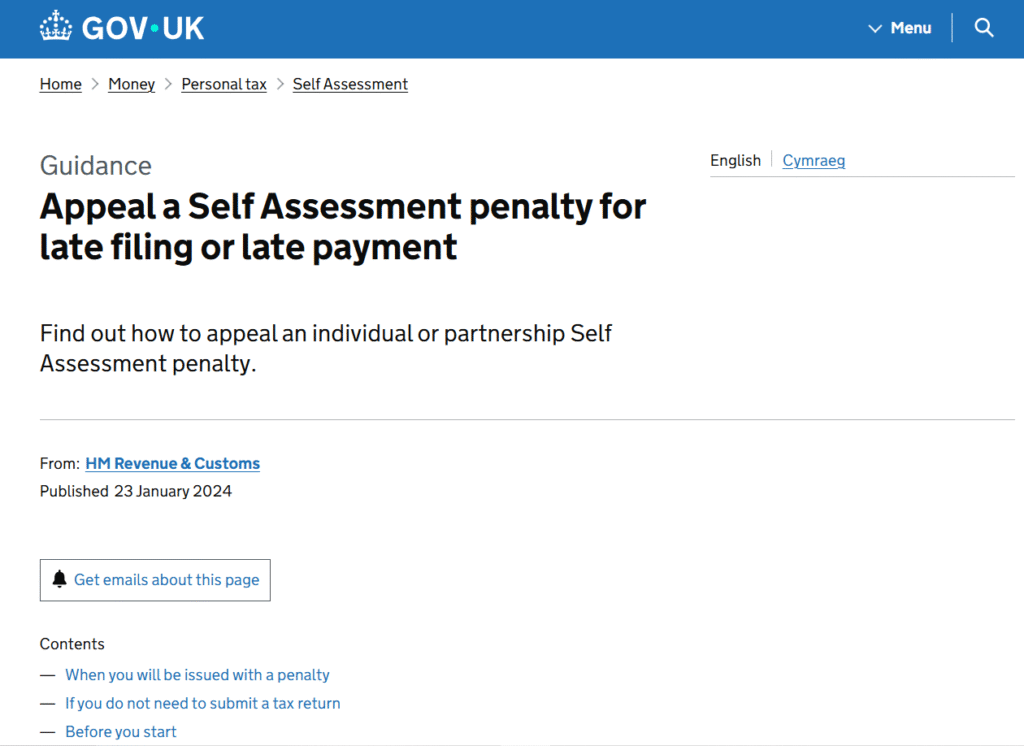
Official HMRC guidance on appealing a Self Assessment penalty
SA370 or SA371?
SA370 is generally used for individual Self Assessment penalty appeals. Partnerships have a separate penalty appeal form, SA371. Using the correct route can avoid unnecessary delays in dealing with the appeal.
What Penalties Can Be Challenged?
SA370 is primarily relevant to Self Assessment late filing and late payment penalties.
A late tax return can initially trigger a £100 penalty, with further penalties potentially arising where the return remains outstanding for longer. Separate penalties and interest may also arise where Self Assessment tax is paid late.
This is why an appeal should not be viewed in isolation. If the underlying return has still not been filed, or tax remains outstanding, those issues generally need to be dealt with as well. Waiting for HMRC to decide an appeal does not normally stop the underlying Self Assessment obligations. If you also need help bringing the return itself up to date, see our Self Assessment support.
Before You Appeal: Check the Timeline
A strong appeal usually starts with the chronology rather than the wording of the form.
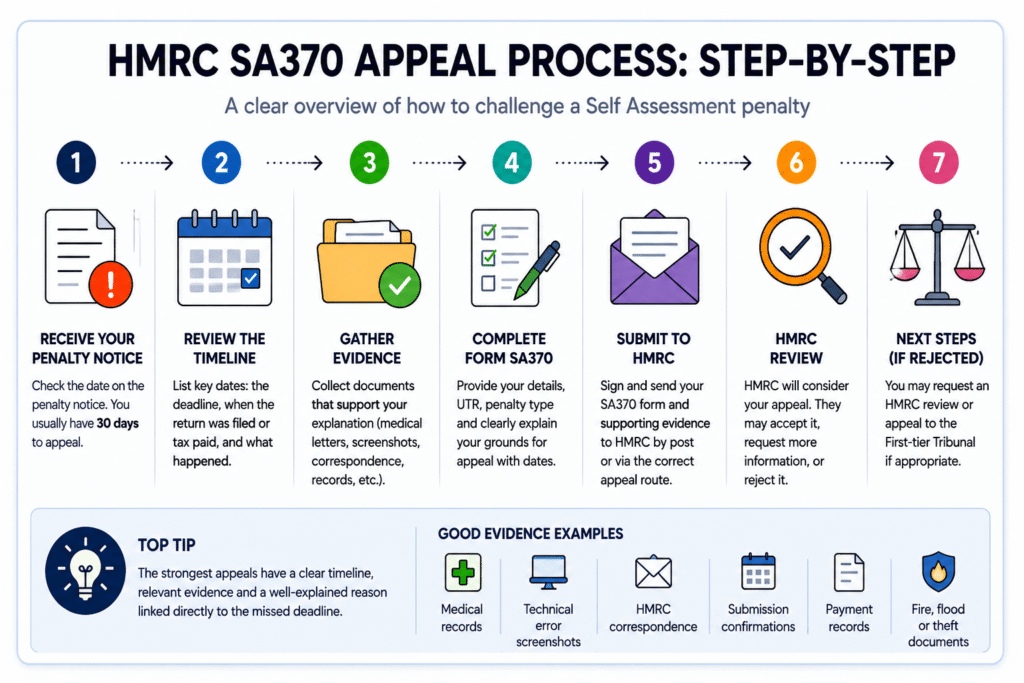
Before preparing SA370, establish the date of the penalty notice, the original filing or payment deadline, when the return was actually submitted or the tax paid, what prevented compliance and when that problem ended.
Supporting records should then be matched to that timeline. This is often where weak appeals go wrong: the explanation may sound reasonable in general, but the dates do not show why the obligation could not have been completed on time.
Two Common Grounds for an SA370 Appeal
The Penalty Was Issued Incorrectly
Not every appeal depends on reasonable excuse. Sometimes the underlying facts are wrong.
If you have evidence that a return was submitted on time, that HMRC’s records do not reflect what actually happened, or that a filing obligation may not have applied, the appeal should focus on those facts rather than trying to create a reasonable excuse that does not fit the case.
You Had a Reasonable Excuse
A reasonable excuse is generally an unexpected or exceptional circumstance that prevented you from meeting a tax obligation despite taking reasonable care.
HMRC looks at the circumstances of the individual taxpayer. There is no single list of excuses that guarantees a successful appeal. The explanation needs to show what happened, how it affected your ability to comply and what you did once the problem was resolved.
Examples of Reasonable Excuses
- Serious illness or medical emergency – where the circumstances genuinely prevented you from dealing with your Self Assessment obligations.
- Bereavement – particularly where the death of a close relative occurred close to the relevant deadline.
- HMRC online service failure – where a genuine technical problem prevented filing and you can identify when it happened.
- Unexpected postal problems – where relevant to a paper submission and outside your control.
- Fire, flood or theft – where essential records or access to information were unexpectedly lost.
- Another serious unexpected event – where the circumstances directly affected your ability to file or pay on time.
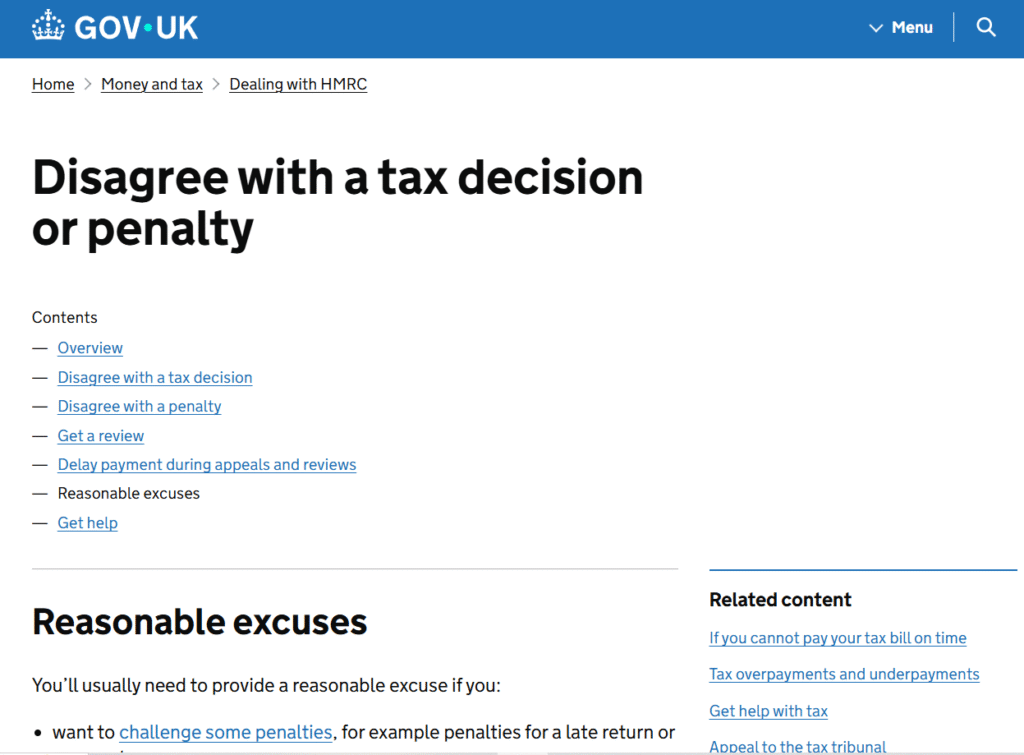
Read HMRC guidance on reasonable excuses
What HMRC May Not Accept as a Reasonable Excuse
Simply saying that you forgot the deadline, did not receive a reminder, found the online system difficult or did not have enough money to pay will not necessarily establish a reasonable excuse.
The same applies to relying on another person without showing that reasonable steps were taken to make sure the tax obligation was dealt with.
The practical question is always the same: what specifically prevented compliance, for how long, and what happened once the obstacle was removed?
What Evidence Can Support an SA370 Appeal?
The most useful evidence is evidence that supports the timeline and the reason being relied upon.
Depending on the circumstances, this may include medical documentation, correspondence, submission confirmations, payment records, screenshots of technical errors, postal records, communications with HMRC or documents relating to fire, theft or another serious disruptive event.
Evidence should be relevant rather than simply extensive. A large bundle of documents is not necessarily stronger than a small number of records that clearly support the dates and explanation given.
How to Complete HMRC Form SA370
When completing SA370, you will normally need to provide your personal details and Unique Taxpayer Reference, identify the penalty being challenged and explain the grounds for appeal.
The explanation should be specific. Include important dates, describe what happened in plain language and make clear how the circumstances affected the filing or payment obligation.
A useful structure is:
- what happened and when;
- which Self Assessment obligation was affected;
- why you could not reasonably comply by the deadline;
- when the problem ended;
- what you did afterwards;
- what evidence supports the explanation.
Before sending the appeal, check that the explanation, dates and documents are consistent with each other.
SA370 Appeal Deadline and Late Appeals
The normal deadline for appealing a Self Assessment penalty is 30 days from the date of the penalty notice.
If the 30-day period has already passed, that does not necessarily mean the position is beyond review. HMRC may consider a late appeal, but the reason for the late appeal normally needs to be explained as well.
In practice, a late appeal can therefore involve two separate issues: why the original filing or payment deadline was missed, and why the penalty itself was not appealed within the normal period.
SA370 Form or Online HMRC Appeal?
Not every Self Assessment penalty needs to be appealed using a paper form. Depending on the type of penalty and the route available to you, HMRC may allow an online appeal through its digital services.
HMRC provides guidance to help taxpayers identify the appropriate route. The important point is to follow the process relevant to the particular penalty rather than assuming every Self Assessment appeal is handled in exactly the same way.
What Happens After You Submit the Appeal?
HMRC will consider the grounds of appeal and any supporting information provided. It may accept the appeal, request further information or decide that the penalty should remain.
If HMRC rejects the appeal, further options may be available depending on the stage of the case. These can include requesting an HMRC review and, where appropriate, taking the matter to the First-tier Tribunal.
HMRC correspondence should therefore be reviewed carefully before deciding what to do next. The appropriate response will depend on the decision issued and the arguments or evidence already considered.
Should You Pay the Penalty While Appealing?
Payment and appeal are separate issues. HMRC guidance encourages taxpayers to consider paying the penalty while an appeal is being considered because interest may become relevant if the appeal is unsuccessful.
Paying a penalty does not necessarily prevent the appeal from continuing. Where the position is unclear, the penalty notice and current HMRC guidance should be considered together.
Common Mistakes When Filing SA370
- Giving a vague explanation without dates or a clear link to the missed deadline.
- Using the wrong grounds where the real issue is an HMRC record or factual error.
- Ignoring available evidence that could support the explanation.
- Appealing late without explaining why the appeal itself was delayed.
- Leaving the underlying return outstanding while focusing only on the penalty.
- Assuming one appeal automatically covers every penalty notice without checking what each notice relates to.
- Submitting irrelevant documents rather than evidence connected to the actual period of non-compliance.
How Audit Consulting Group Can Help
Our work starts with the penalty notice rather than with a standard appeal template. We review what HMRC has penalised, the relevant deadlines, your filing or payment history and the circumstances leading to the penalty.
Where there are reasonable grounds to proceed, we can help organise the timeline, identify relevant supporting documents and prepare the appeal so that the facts are presented clearly and consistently.
The usual process is straightforward:
- Penalty review – we examine the notice and identify what is being challenged.
- Grounds assessment – we consider whether the issue concerns reasonable excuse, incorrect facts or another relevant point.
- Evidence review – we identify which documents are useful and which are unlikely to add value.
- Appeal preparation – we prepare the explanation and relevant SA370 information.
- HMRC correspondence – where included within the agreed scope, we can assist with further communication and review HMRC’s response.
No adviser can guarantee that HMRC will cancel a penalty. Our role is to make sure the appeal is based on the actual facts, follows the appropriate process and is supported by the information available.
For wider penalty matters, see our Appeal Against Penalties service. You can also read more about our Self Assessment Penalties & Appeals support.
Practical SA370 Appeal Examples
Serious Illness Close to the Filing Deadline
An individual is unexpectedly admitted to hospital shortly before the Self Assessment deadline. The return is submitted once the individual has recovered sufficiently to deal with their tax affairs.
A properly prepared appeal would focus on the relevant medical period, the filing deadline, when the taxpayer was able to act again and what was done immediately afterwards. Medical evidence may help support the chronology.
Penalty Issued Where the Taxpayer Believes the Return Was Filed on Time
Here the central issue is not reasonable excuse but the factual record. Submission confirmations, online account records or other filing evidence may be more important than a long explanation of personal circumstances.
Appeal Made After the 30-Day Deadline
If a taxpayer had serious circumstances that also prevented them from dealing with the penalty notice, the appeal may need to address both delays separately. HMRC will consider the facts, and a late appeal is not automatically accepted simply because the original penalty is disputed.
What Taxpayers Often Underestimate About SA370 Appeals
The form is rarely the hardest part. The difficulty is usually making sure the explanation matches the evidence and covers the whole period of delay.
For example, evidence of an illness may explain why a deadline was missed, but it may not explain why no action was taken for several months afterwards. Equally, a genuine technical problem may be relevant for one day but not necessarily for a much longer period.
This is why the timeline matters. HMRC needs to understand not only that something went wrong, but how that problem actually prevented compliance and how quickly the position was corrected once it was possible to act.
FAQ – HMRC SA370
What is HMRC form SA370?
SA370 is an HMRC form used by individuals to appeal certain Self Assessment late filing and late payment penalties.
Can I appeal online instead of using SA370?
In some circumstances, yes. HMRC provides online appeal routes for certain Self Assessment penalties. The correct route depends on the penalty and your circumstances.
How long do I have to appeal?
The normal appeal period is 30 days from the date of the penalty notice.
Can I appeal after 30 days?
A late appeal may still be considered, but you should normally explain why the appeal itself was late as well as why the original filing or payment deadline was missed.
What counts as a reasonable excuse?
HMRC considers each case individually. Serious illness, bereavement, certain technical failures and other unexpected events may be relevant where they genuinely prevented compliance.
What evidence should I provide?
The evidence depends on your circumstances. It may include medical records, submission confirmations, payment records, technical error evidence, postal documents or correspondence with HMRC.
What if my Self Assessment return is still outstanding?
You should generally deal with the outstanding return as soon as possible. Appealing a penalty does not normally remove the obligation to file.
Can I appeal if I have already paid the penalty?
Payment does not necessarily prevent you from appealing. The appeal and payment position should be considered separately.
What happens if HMRC rejects my appeal?
Depending on the stage of the case, further options may include an HMRC review or an appeal to the First-tier Tribunal.
Can an accountant help with SA370?
Yes. A tax professional can review the penalty, assess the grounds, organise the supporting information, prepare the appeal and assist with HMRC correspondence where authorised.
SA370 Appeal Service Cost UK
The cost of professional SA370 support depends on the complexity of the case, the number of penalties involved, the quality of the available records and whether further HMRC correspondence is required after the initial appeal.
A straightforward appeal involving one penalty and a clear set of supporting documents will usually require less work than a case involving multiple penalties, a late appeal, disputed HMRC records or substantial correspondence.
Before work begins, Audit Consulting Group can review the nature of the matter and confirm the appropriate scope.
Service Cost Estimation
Select the service category below to calculate the estimated cost of either accounting & tax services or forms and submissions.
Select Required Services / Forms
Select one or more services/forms to receive an accurate cost estimate. You can adjust your selection at any stage.
How would you like to engage our services?
Please select whether you require a one-off service or ongoing monthly support.
Contract Duration
Your cost estimate
Apply now and get 10% OFF
Submit your request today and receive an exclusive 10% discount on your selected service.
All prices are estimates. To receive a personalised quote, please fill out the form or contact us.
Ready to get started?
Get professional support from experienced UK accountants
Need Help With an HMRC SA370 Appeal?
If you have received a Self Assessment penalty, send us the penalty notice together with the relevant filing or payment dates and a short explanation of what happened. We can review the position, identify the appropriate appeal route and confirm the scope of support required.