

UK VAT Registration for Companies with Non-Resident Directors
Who This Guide Is For
UK Limited Companies with Non-Resident Directors or Shareholders
This guide is for UK Ltd companies where one or more directors (or beneficial owners) live abroad. You may be searching for things like UK company non resident director, register as a director, or “does a foreign director make my company non-resident for VAT?” The short answer is: director residency alone does not decide VAT — but it does affect HMRC’s verification approach.
Internal link: UK VAT registration for non-residents and foreign companies
Overseas Entrepreneurs Using a UK Company to Trade Internationally
Many founders incorporate a UK company to sell:
- digital services (SaaS, subscriptions, online learning)
- goods via e-commerce and marketplaces
- professional services to UK and overseas clients
- cross-border trading with UK customers, UK fulfilment, or UK suppliers
If you’re building an overseas-led UK trading entity, HMRC will care about evidence, governance, and whether your VAT story matches your operational reality.
Explore how advisors assist clients in structuring UK companies with foreign management for optimal business operations and compliance.
Advisors Helping Clients Structure UK Companies with Foreign Management
If you support founders as an accountant, consultant, or corporate services provider, this article provides a practical checklist of what HMRC focuses on in these “UK company + foreign management” cases and how to reduce avoidable delays.
Company Residence vs Director Residence – What Really Matters for VAT?
Tax Residence of a UK Company vs Personal Residence of the Director
A director’s personal tax residence (where they pay personal income tax) and a company’s tax profile are different topics — and VAT is a separate layer again.
- Director residence: personal tax rules (e.g., whether a director is a UK taxpayer, and where duties are performed).
- Company residence (corporation tax concepts): where a company is managed/controlled can matter for wider tax analysis.
- VAT: focused on taxable supplies, establishment, and how/where transactions happen.
So while searches like non resident directors UK tax and UK limited company non resident director tax are common, VAT registration is not decided purely by the director’s passport or address.
How UK Company Residence Affects VAT Registration
A UK incorporated company is generally treated as a UK entity for VAT registration routes and can register like other UK businesses (mandatory or voluntary). HMRC’s “Register for VAT” guidance is framed around what you supply and when you become liable, not your directors’ nationality – https://www.gov.uk/register-for-vat/how-register-for-vat
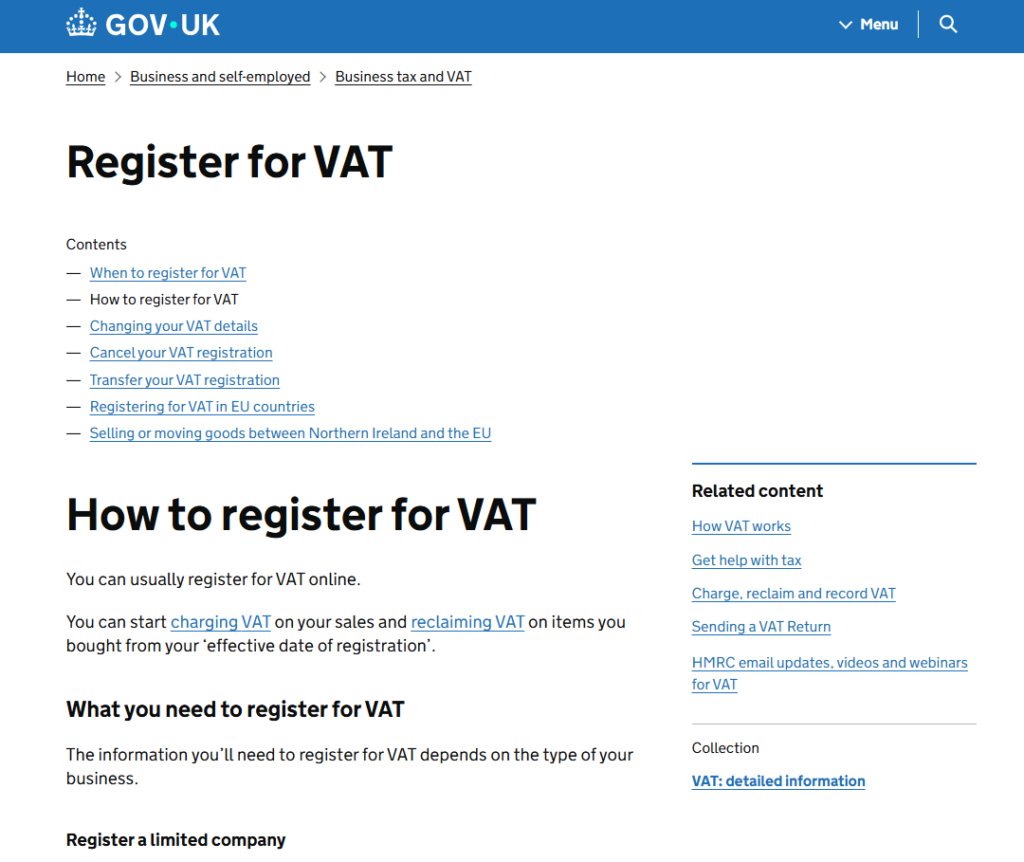
This is why many UK companies with foreign directors do not register under the NETP process that overseas companies use — even though ownership and management are overseas.
When a “UK Non-Resident Company” Becomes Relevant for HMRC
You may see phrases like UK non resident company, overseas business, overseas taxes, and UK taxation for non residents when founders worry about “being overseas” and UK obligations.
Two practical notes:
- For VAT, HMRC still mainly asks: what supplies are you making, and where?
- For broader tax strategy, being managed from overseas can raise questions outside VAT (e.g., corporate tax residence concepts), but that requires separate advice and should not be confused with VAT registration rules.
This guide stays VAT-focused, with practical signposting where these topics intersect.
VAT Registration Triggers for UK Companies with Foreign Directors
Non-Resident VAT Registration for UK Companies with Foreign Directors
Here’s the core concept behind the primary keyword:
Non-resident VAT registration for UK companies with foreign directors is usually not “NETP registration”. Instead, it’s a UK company registering for VAT while HMRC applies enhanced verification because the people controlling the company are overseas.
In other words: the company is UK-incorporated, but the control profile is non-resident — and that influences HMRC’s checks.
Business Activities, Turnover and UK Customers
Your UK company must register when it becomes liable — usually because it:
- exceeds the VAT threshold based on taxable turnover, or
- expects to exceed the threshold within a defined future period, or
- chooses voluntary registration for commercial reasons (input VAT recovery, credibility, marketplace needs)
For detailed threshold and “when must we register” logic, use your cluster article:
Internal link: when a non-resident must register for UK VAT (eligibility & thresholds)
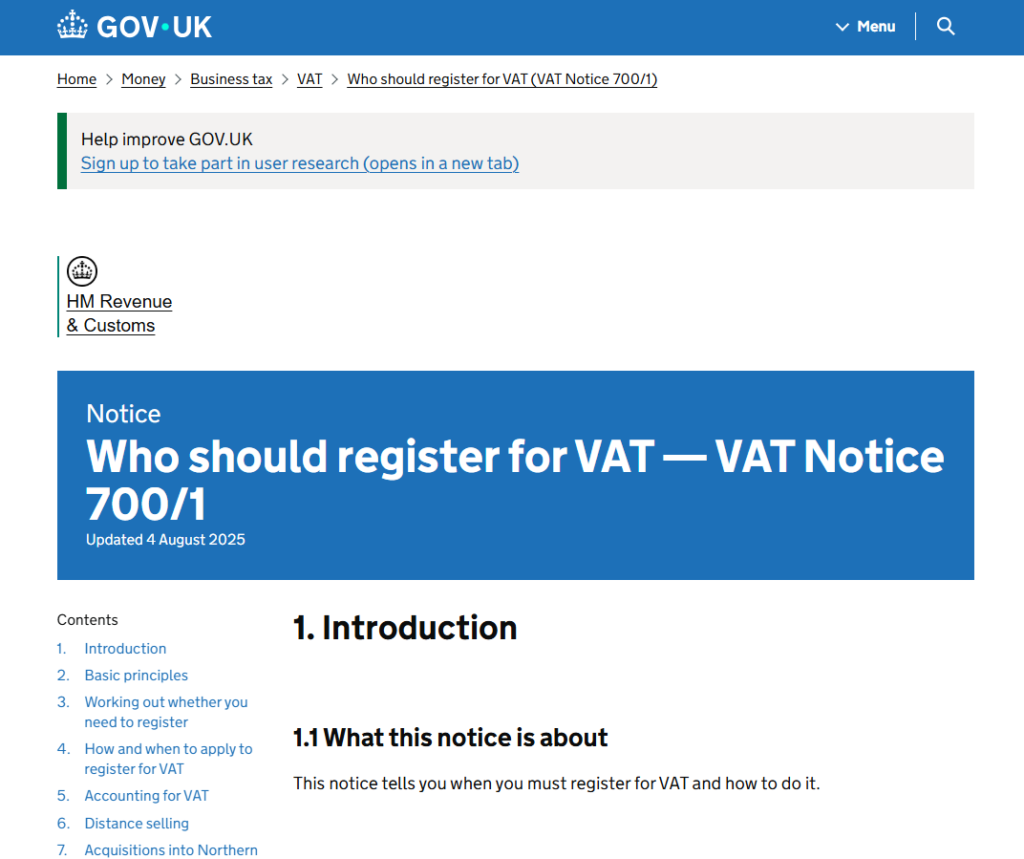
HMRC’s VAT Notice 700/1 explains when businesses must register, including non-established taxable persons and timing rules – Read more
Why HMRC Looks Closely at Companies with Non-Resident Directors
HMRC tends to apply more scrutiny where the UK presence looks “thin” or where the company could be used as a temporary vehicle. Typical risk signals include:
- directors and owners fully overseas
- minimal UK operational footprint
- unclear supply chains or mismatched descriptions
- weak documentation for who does what (director/UBO roles, authority, control)
- unusually high expected VAT reclaims early on
- address or banking arrangements that are hard to verify
This does not mean HMRC will refuse registration — it means you should assume more questions and build a stronger evidence pack from day one.
VAT Registration Without a Traditional UK Address
Secondary keyword focus: vat registration without UK address.
Registered Office, Virtual Office and Real Economic Presence
UK companies always need a registered office for Companies House purposes. That address can be:
- a genuine office you use, or
- a professional service address, or
- a virtual office provider address (depending on your arrangement)
For VAT, HMRC often looks beyond the registered office and asks: where are real business activities managed and evidenced? A registered office may be enough for correspondence, but it doesn’t automatically prove real trading.
Can You Register for VAT Without a Physical Office in the UK?
In many cases, yes — it can be possible to complete VAT registration without a UK address in the “physical office” sense. HMRC mainly needs a reliable correspondence route and credible evidence of genuine trading.
However, “possible” does not mean “effortless”. Companies with:
- overseas directors, and
- a virtual/serviced address, and
- limited trading history
often receive more verification questions.
HMRC’s VAT registration guidance indicates that what you need depends on your business type and circumstances.
Practical tips that help:
- Use a stable correspondence address (registered office or adviser address)
- Ensure your website, contracts, invoices, and platform accounts show consistent company details
- Avoid mismatches between the VAT application narrative and how you actually operate
What HMRC Checks When Your UK Address Is Virtual
When the UK address is a registered office/virtual office, HMRC commonly looks for:
- proof that the company genuinely exists and is controlled by identifiable people
- proof of trading intention or trading reality (contracts, purchase orders, invoices)
- credible supply chain explanation (where goods are stored, who fulfils, who imports)
- robust contact route (who answers HMRC, and how quickly)
- consistency across Companies House, the VAT application, and commercial documents
If you want a full evidence checklist, point readers to the documents/process article:
Internal link: documents and forms needed for UK VAT registration
Apostilled Documents and KYC for UK Companies with Foreign Directors
Secondary keyword focus: apostilled documents UK company.
Why Apostilled Documents May Be Required
Not every VAT registration needs apostilles. But where directors/owners are overseas, HMRC may request stronger verification documents to reduce fraud risk and confirm identity and authority.
Apostilles/certified copies often come up when:
- identity checks need stronger support (overseas passports, overseas proof of address)
- documents originate outside the UK and can’t easily be verified
- there is a mismatch or inconsistency that HMRC wants resolved
- banking providers also require legalisation (common parallel challenge)
Typical Apostilled Documents for UK Companies with Foreign Directors
When apostilled documents are requested (by HMRC or in practice by banks/advisers), they usually relate to:
- director identity documents (passport copies, national IDs)
- director proof of address
- authority evidence (where applicable)
- sometimes incorporation-related documentation or official extracts (depending on the fact pattern)
The operational rule: don’t apostille everything “just in case”. Instead, be ready to produce stronger-certified documents quickly if HMRC asks.
How Apostilled Documents Support VAT Registration and Banking
Even when HMRC doesn’t insist on apostilles, banks often do — and a clean banking setup can reduce friction for VAT refunds and payments.
So while apostilled documents UK company is a VAT keyword, it’s also a practical “infrastructure” topic: it can help you satisfy both tax and banking KYC expectations faster.
Internal link: ongoing UK VAT compliance for non-resident companies (for refunds, payments, and MTD setup)
Bank Accounts for UK Companies with Foreign Directors
Secondary keyword focus: uk company foreign director bank account + LSI banking terms.
Opening a UK Business Bank Account When the Director Is Non-Resident
Opening a UK bank account can be difficult when directors are overseas. Still, many founders aim for a UK account because it can simplify:
- VAT payments in GBP
- refund receipts from HMRC
- reconciliation (payouts from marketplaces/Stripe/etc.)
- overall credibility during onboarding and verification
This links closely with searches like:
- UK bank account for non residents
- UK business bank account for non residents
- UK bank account for non UK residents
Key practical point: a UK account is often helpful, but VAT registration may still be possible without it — depending on the case and what alternative payment details you provide.
Alternatives If You Cannot Open a Traditional UK Bank Account
If a “classic” UK bank account is delayed, many overseas founders use:
- multi-currency business accounts (GBP balance)
- fintech accounts that provide UK sort code/account details
- a reputable overseas business account with strong documentation and consistent naming
These options align with LSI searches like UK business account for non residents, but the VAT priority is simpler: you must be able to pay VAT reliably and evidence transactions clearly.
How Bank Accounts Affect VAT Registration and HMRC Risk Assessment
Banking isn’t always a formal VAT registration requirement, but it can influence how “low friction” your registration feels to HMRC.
Why?
- VAT refund claims often trigger evidence requests
- HMRC may ask how money flows through the business
- transparent payment flows make your turnover story easier to support
So: a clean banking story = fewer questions.
Using Non-UK Accounts – Practical Risks and Limitations
Using a non-UK account is often workable, but watch for:
- international payment delays (late VAT payments lead to interest/penalties)
- reference formatting issues that cause misallocation
- FX conversion inconsistencies that complicate reconciliations
- additional verification steps for refund routing
If you operate with marketplaces, also ensure payouts and settlement reports are consistent with your VAT records.
Internal link (e-commerce context): UK VAT rules for Amazon FBA and marketplaces
Directors’ Personal Tax vs Company VAT and Corporation Tax
Non-Resident Directors and UK Personal Tax Exposure
If you are a director living abroad, personal tax questions are real — but they’re separate from VAT. Your searches might include:
- non resident directors UK tax
- UK limited company non resident director tax
- register as a director
Broadly, personal tax depends on your residence status and where your director duties are performed. VAT registration, meanwhile, depends on the company’s taxable supplies and VAT rules.
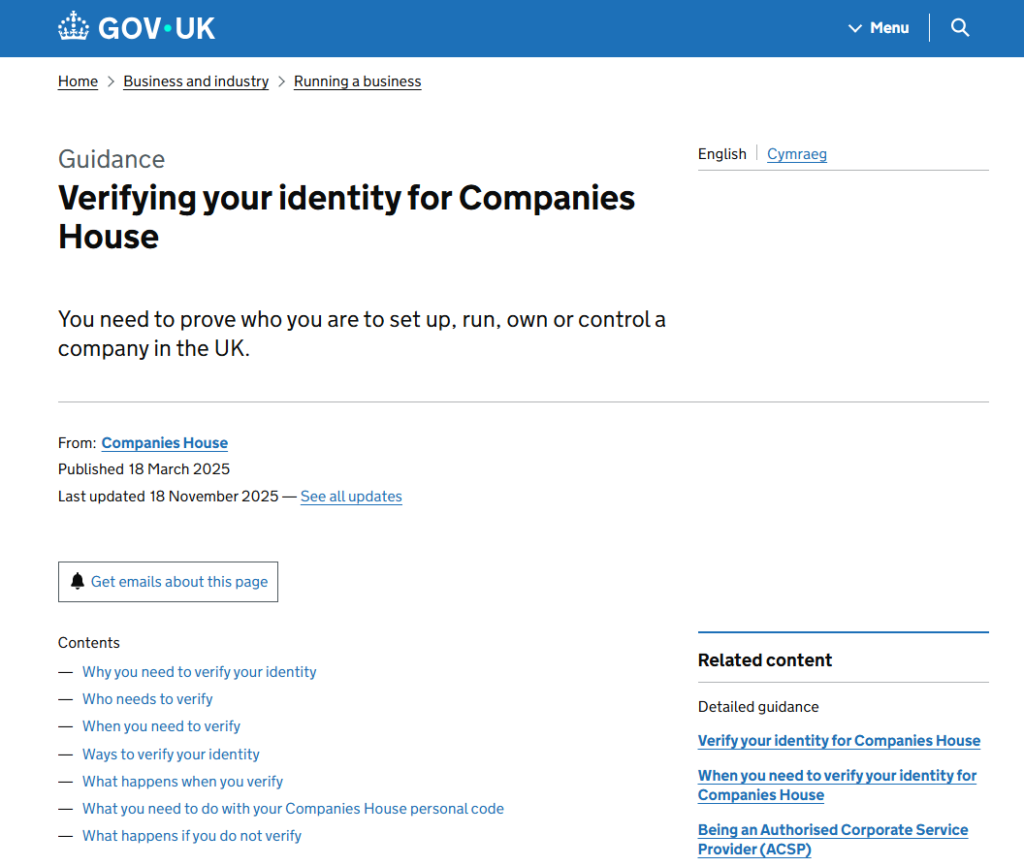
(For director/PSC identity verification developments, Companies House has introduced identity verification requirements, which can affect governance admin for directors and PSCs.) – https://www.gov.uk/guidance/verifying-your-identity-for-companies-house
UK Corporation Tax for Companies with Foreign Directors
Corporation tax is about company profits and broader residence/management concepts. The keyword non resident company UK corporation tax reflects a separate analysis from VAT — but in practice, founders often need both VAT and corporate tax strategy aligned.
The key message for VAT planning: don’t assume that “we are managed overseas” removes UK VAT obligations if the company makes UK taxable supplies.
How VAT, Corporation Tax and Directors’ Personal Tax Interact in Practice
They intersect operationally in three places:
- Evidence and governance: directors/PSCs must be identifiable and verifiable (KYC/identity verification, document consistency)
- Commercial substance: contracts, invoicing, and supply chain reality must match the story (VAT risk)
- Banking and compliance: payment flows and record-keeping support VAT returns and reduce HMRC queries
But they remain different taxes with different triggers — and should be treated as separate workstreams.
Practical Scenarios – UK Companies with Foreign Directors
Trading Company Managed from Overseas
Scenario: UK Ltd, director lives abroad, sells goods/services to UK customers.
VAT reality: If the company makes UK taxable supplies (and meets registration criteria), VAT registration may be required regardless of director residence. HMRC will likely request clear trading evidence and may ask more questions if UK presence looks minimal.
Helpful evidence in this scenario:
- signed contracts / purchase orders
- invoices and platform reports
- clear explanation of fulfilment/import route (if goods)
- proof of marketing/sales activity and customer pipeline (if newly formed)
Holding or IP Company with a Non-Resident Director
Scenario: UK Ltd holds IP or shares and has minimal trading activity.
VAT reality: Many holding-only activities don’t create taxable supplies (often outside scope or exempt, depending on the facts), so VAT registration may not be relevant. But founders often still face KYC and governance questions for banks and corporate compliance.
If the company starts providing chargeable services (licensing, management services, etc.), VAT may become relevant quickly and should be reviewed.
E-commerce or Amazon FBA Structure with a UK Company and Foreign Director
Scenario: UK Ltd is the seller of record; stock is held in UK fulfilment (FBA/3PL); director lives overseas.
VAT reality: Stock in the UK and domestic sales create strong VAT triggers. In addition, marketplace reporting, deemed supplier logic, and imports can add complexity.
Internal link: UK VAT rules for Amazon FBA and marketplaces
This is one of the scenarios where using a UK agent can reduce mistakes and speed up HMRC handling.
Internal link: UK tax representative for non-resident companies
Step-by-Step: How to Register for VAT if Your Director Is Non-Resident
Check Whether Your UK Company Must Register for VAT
Start with eligibility and timing (thresholds, first-sale triggers in some models, voluntary registration logic).
Internal link: when a non-resident must register for UK VAT
HMRC overview: Register for VAT guidance.
Prepare Documents That HMRC Will Expect from Companies with Foreign Directors
Even though the UK company uses the standard route, enhanced verification is common. Prepare:
- incorporation and Companies House details
- director ID and proof of address (overseas addresses often trigger extra checks)
- UBO/PSC information and governance records
- contracts/invoices/evidence of planned or actual trading
- supply chain explanation (especially for e-commerce/import models)
Internal link: documents and forms needed for UK VAT registration
Address, Banking and Evidence of Real Business Activity
This is the “approval speed” triangle:
- Address: stable correspondence and consistency across records
- Banking: reliable payment method, clean payout evidence
- Activity evidence: credible commercial documentation and supply chain mapping
If any corner is weak, HMRC questions tend to increase.
Working with a UK Tax Agent or Representative
Overseas-led UK companies often benefit from a UK agent because:
- HMRC communication becomes faster and more consistent
- document packs are structured “the way HMRC expects”
- you reduce errors in describing supply chains, imports, and marketplaces
- you avoid late responses caused by time zones
Internal link: UK tax representative for non-resident companies
For the official HMRC process overview, see “Register for VAT” – https://www.gov.uk/register-for-vat/how-register-for-vat
FAQs – UK Companies with Foreign Directors and VAT Registration
Does having a foreign or non-resident director affect UK VAT registration?
Director residence does not decide VAT registration by itself. VAT depends on the company’s taxable supplies and the VAT registration rules. However, foreign directors often mean enhanced HMRC verification and more document checks.
Can my UK company register for VAT without a UK address or physical office?
A UK company must have a registered office, but it may be possible to register for VAT without a “traditional” physical office. HMRC mainly needs reliable contact details and credible evidence of genuine trading, though virtual address setups often receive extra scrutiny.
Do I need a UK business bank account to register for VAT if my director is non-resident?
Not always, but a UK account can reduce friction for payments and refunds. If you use a non-UK or multi-currency account, ensure payments are reliable, references are correct, and records reconcile cleanly.
What apostilled documents does HMRC usually ask for in such cases?
Not every case requires apostilles, but HMRC may request certified/apostilled documents where identity or authority needs stronger verification (often director ID and proof of address). It’s best to be prepared to provide stronger-certified copies quickly if asked.
How do corporation tax and personal tax rules for non-resident directors interact with VAT?
They’re different systems. VAT relates to taxable supplies and VAT rules, while corporation tax relates to company profits and tax residence concepts, and personal tax relates to the director’s residence and duties. They overlap operationally through governance, evidence, and HMRC/banking checks.
Can I change directors or restructure the company after VAT registration?
Yes, but changes should be handled carefully and kept consistent across Companies House records, banking/KYC, and VAT records. Some changes may need to be notified to HMRC depending on what changes and how it affects VAT compliance.
Where can I find more detailed step-by-step information?
Use the cluster guides linked:
- UK VAT Registration for Non-Residents and Foreign Companies: The Ultimate Guide
- Eligibility & Thresholds: When Must a Non-Resident Register for UK VAT?
- Documents for UK VAT Registration: Checklist for Foreign Companies
- Tax Representatives & Agents: Mandatory Requirements and Costs
- E-commerce & Digital Sellers: VAT Rules for Amazon FBA and Marketplaces
- MTD for VAT & Returns for Non-Residents: UK Compliance Guide
- UK Companies with Foreign Directors: A Specific VAT Registration Guide
How Audit Consulting Group Can Help
UK VAT registration for a UK Ltd with overseas directors is very doable — but the key is preparing an HMRC-ready application narrative and evidence pack, especially when you have:
- a virtual/serviced address
- overseas directors/owners
- banking constraints
- e-commerce/import supply chains
Audit Consulting Group can support you with:
- assessing VAT registration triggers and timing
- preparing the document pack and “business activity explanation” HMRC expects
- handling VAT registration even where VAT registration without UK address concerns exist
- guidance on apostilled documents UK company (when they help, when they’re unnecessary)
- practical setup for UK company foreign director bank account limitations
- post-registration compliance planning (MTD, returns, refunds)
Audit Consulting Group – Accounting and Tax
+44 7386 212550
info@auditconsultinggroup.co.uk
If you share your structure (UK registered office type, director locations, what you sell, and whether you hold UK stock), we can map the fastest compliant route and reduce HMRC delays and back-and-forth.