

The Ultimate Guide to UK VAT Registration for Non-Residents and Foreign Companies
Who This Guide Is For
Non-UK Residents and Overseas Companies Looking at the UK Market
This guide is written for founders, finance teams, and advisers who need clarity on vat registration for non uk residents, including vat registration for foreign companies and uk vat registration for overseas companies.
Typical situations include:
- you sell goods to UK customers (B2C or B2B)
- you store goods in the UK (warehouse, 3PL, Amazon FBA)
- you import goods into Great Britain and then sell domestically
- you provide services where UK VAT rules treat the UK as the place of supply
- you run a non-UK company that is expanding into the UK market but wants to avoid late registration, penalties, and marketplace disruption
HMRC’s VAT registration guidance is explicit that overseas businesses may need to register regardless of turnover in certain cases (for example, when based outside the UK and making UK supplies). https://www.gov.uk/register-for-vat
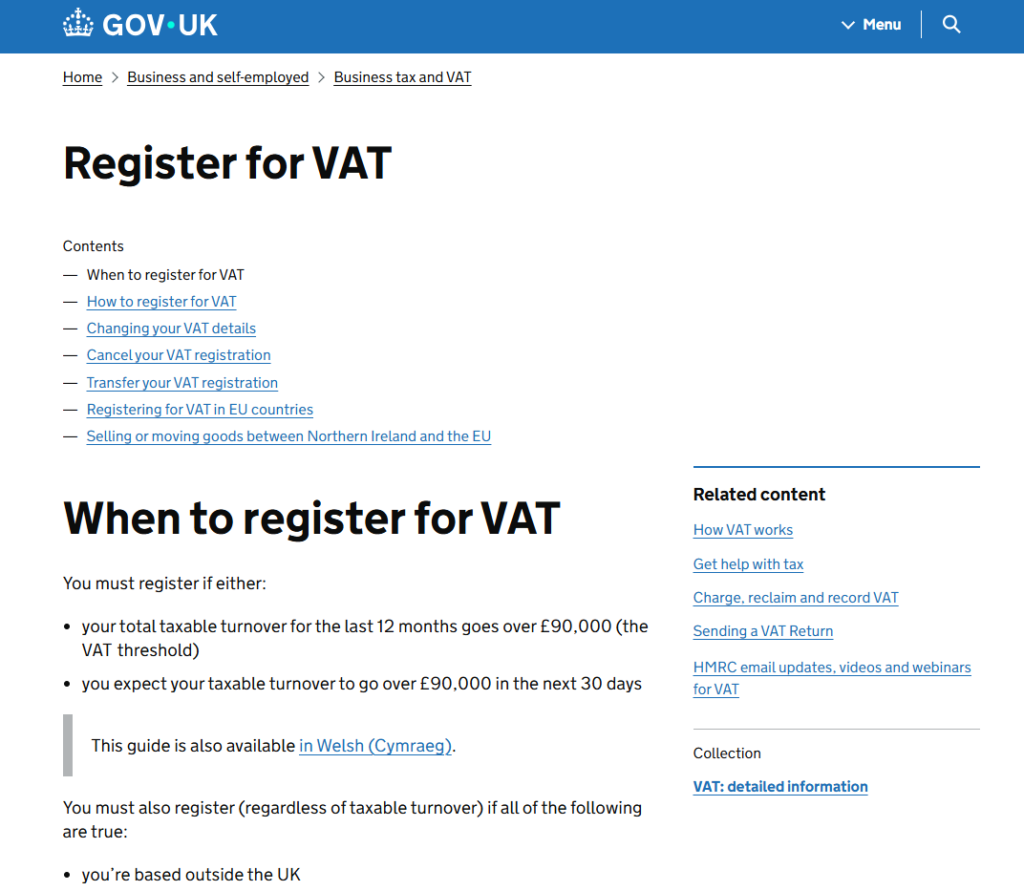
Discover the UK VAT registration process for foreign companies and the requirements for non-UK businesses on our VAT services page.
Typical Business Models: Trading, E-commerce, Digital Services and Holding Structures
Most overseas VAT questions fall into a few model “families”:
- Trading & distribution: importing into the UK, holding stock, selling to UK customers (often B2B + wholesale).
- E-commerce & marketplaces: Amazon, eBay, Shopify/WooCommerce, fulfilment providers, cross-border shipping, returns logistics.
- Digital services & SaaS: subscriptions, apps, streaming, online learning, B2B services with reverse charge considerations.
- Holding / IP / group structures: UK companies used for commercial reasons, with international directors and multi-country operations (VAT may or may not apply depending on supplies).
The key point: UK VAT isn’t determined by where you live — it’s determined by the nature of supplies and how your supply chain is structured.
What You Will Learn from This Guide
By the end, you’ll understand:
- what “non-resident” means in VAT terms, including NETP
- the main VAT registration routes for overseas businesses
- how to think about thresholds, “first sale” triggers, and voluntary registration (high level)
- what the registration process looks like in practice (documents, checks, timelines, cost ranges)
- how this pillar connects to the detailed cluster articles so you can go deeper where relevant
Understanding UK VAT and Who Counts as a “Non-Resident”
What VAT Is and How It Works in the UK
UK VAT is a consumption tax charged on taxable supplies of goods and services. Businesses charge VAT on sales (output VAT) and may reclaim VAT on purchases and imports (input VAT) where the costs relate to taxable activity.
Once registered, you generally file VAT returns and pay (or reclaim) the net difference. Importantly for overseas businesses: VAT is not only about charging 20% — it’s about applying the correct UK VAT treatment based on place of supply, customer type (B2B/B2C), and what is being supplied.
Non-UK Residents, Foreign Companies and NETPs – Key Definitions
When people say “non-resident VAT”, they often mean one of three things:
- Non-UK resident / overseas business: a business established outside the UK (for commercial and VAT purposes).
- Foreign company: a company incorporated outside the UK.
- NETP (Non-Established Taxable Person): a VAT concept for a person/business that is liable to register because it makes (or expects to make) UK taxable supplies but is not established in the UK. HMRC uses NETP to apply special registration rules, including timing and threshold implications. https://www.gov.uk/hmrc-internal-manuals/vat-registration-manual/vatreg37150
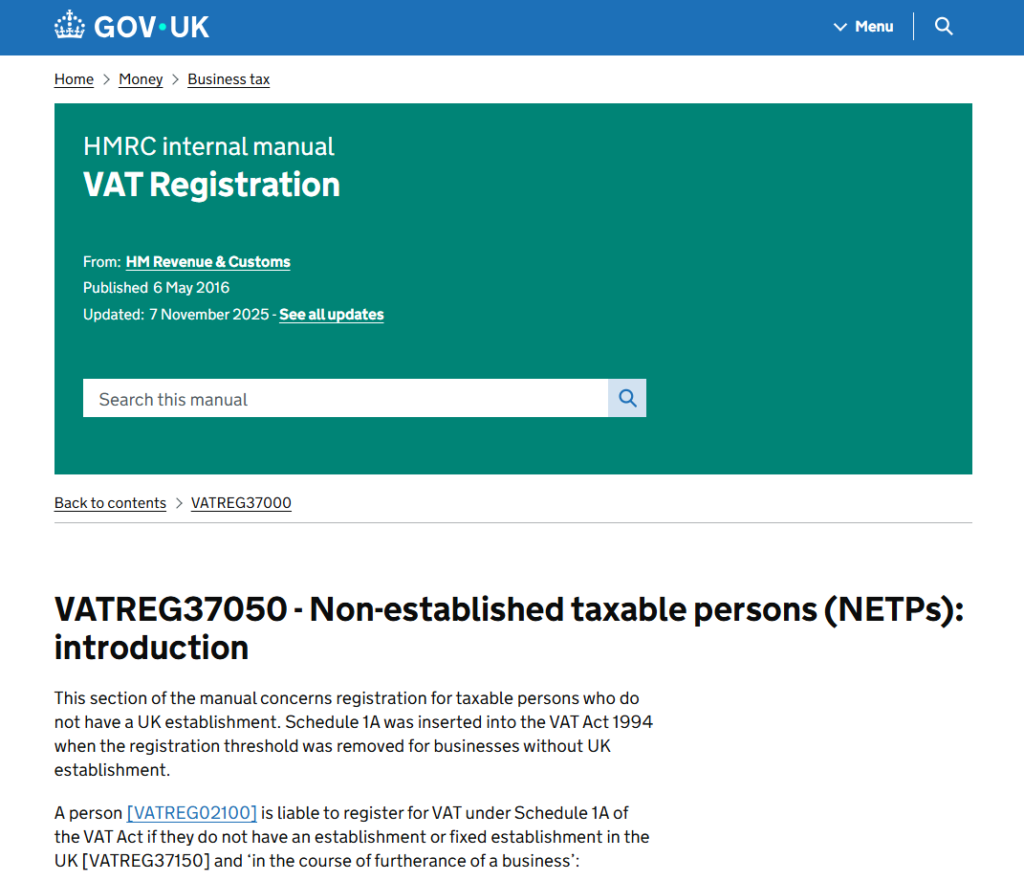
In practice, NETP status is one of the biggest reasons non resident vat registration uk can be required earlier than founders expect.
How UK Taxation for Non-Residents Relates to VAT
Many overseas founders start with VAT, then realise it’s only part of the picture.
You may also be dealing with:
- uk taxation for non residents (the broader framework of UK taxes)
- uk non resident tax questions
- non resident in uk for tax purposes (personal residence tests and duties performed)
- tax in uk for foreigners (practical compliance concerns)
- foreign tax / overseas taxes / overseas taxation (multi-country reporting, VAT/GST elsewhere)
VAT is transactional and supply-chain driven. Corporation tax and personal tax are driven by different triggers (profits, residence, duties, management/control). A clean strategy keeps these workstreams aligned — but doesn’t mix the rules.
VAT Registration Options for Non-UK Residents and Foreign Companies
This section is intentionally high-level. The detailed “how” lives in the cluster articles.
Direct UK VAT Registration as a Non-Established Taxable Person (NETP)
This route applies where the taxable person is overseas and not UK-established but is making (or expects to make) UK taxable supplies.
When it’s used: commonly for overseas sellers with UK stock/fulfilment, import-to-UK models, and certain UK place-of-supply services.
Upside: you can trade compliantly and reclaim relevant input VAT (where allowed).
Downside: HMRC often applies more verification, and in some cases may require additional security/structure.
HMRC indicates overseas businesses may need to register regardless of turnover in certain circumstances.
Using a UK Company to Register for VAT
Some groups prefer to trade through a UK Ltd (or restructure so the UK company is the seller of record). That can simplify some operational elements — but it does not remove VAT obligations; it changes who is responsible and which registration route applies.
This option often intersects with “foreign director” realities (address, banking, KYC evidence).
Internal link: UK VAT registration for companies with foreign directors
Marketplace and E-commerce Structures (Amazon FBA, Online Platforms)
Marketplaces can change VAT responsibility depending on:
- where stock is held
- who is treated as the supplier (deemed supplier rules)
- whether sales are domestic UK, imports, or mixed channels
Even when a platform “handles VAT” for certain transactions, overseas sellers still need to map the model carefully — especially if they hold UK stock or sell outside the marketplace.
Internal link: Amazon FBA VAT for non-residents: UK rules for e-commerce
When a Tax Representative or Agent Becomes Part of the Picture
Many overseas businesses use a UK VAT agent. In some situations, HMRC can require a tax representative (different from an agent) depending on risk factors, because a representative can be jointly liable for VAT debts.
Internal link: UK tax representative for non-residents: costs & requirements
When Do Non-Residents Need to Register for UK VAT? – High-Level Overview
Detailed rules belong in Article 2. This section gives the “mental model”.
The Basic Idea Behind VAT Thresholds and Mandatory Registration
In standard UK scenarios there are turnover-based thresholds and tests (historic rolling turnover and a forward-looking test). However, non resident vat registration can follow different timing depending on whether you are treated as a NETP.
So for vat for non uk residents and non resident vat trading, the high-level reality is:
- there are cases where the usual threshold applies, and
- there are cases where registration can be required from the first UK taxable supply (NETP logic), and
- voluntary registration may make sense in some situations (cash flow, reclaiming VAT, credibility, marketplace requirements)
HMRC explains the general threshold rule and also highlights that some overseas businesses must register regardless of taxable turnover.
Typical Scenarios When Overseas Companies Must Register
Common real-world triggers include:
- UK stock / UK fulfilment: goods stored in the UK and sold to UK customers (warehouse, 3PL, Amazon FBA).
- Import-to-UK then domestic sales: you import goods and sell them in the UK supply chain.
- Certain B2C services with UK place of supply: depending on the service type and customer status.
- Mixed channel models: marketplace + direct website sales (especially from UK stock).
- NETP cases: where the business is not UK-established but makes UK taxable supplies and must register promptly.
When You Might Consider Voluntary VAT Registration
Voluntary registration can be commercially useful if:
- you have meaningful UK input VAT to recover (fees, storage, professional costs, imports)
- you want VAT registration credibility with B2B customers or platforms
- you want to avoid a rushed registration later when you cross a threshold
But it also creates ongoing obligations: MTD, returns, record-keeping, and compliance cost.
Where to Find the Detailed Rules on Thresholds and Eligibility
Internal link: Eligibility & Thresholds: When Must a Non-Resident Register for UK VAT?
(That article should contain the detailed decision tree, NETP “first supply” logic, and practical threshold tests.)
What the UK VAT Registration Process Looks Like – In Brief
Pre-Registration Checks and Choosing the Right Registration Route
Before you apply, confirm:
- are you UK-established or a NETP?
- what exactly are you supplying (goods/services) and to whom (B2B/B2C)?
- where are goods located at time of sale, and who imports?
- do marketplaces change supplier responsibility?
- should you register as an overseas company directly or restructure using a UK company?
Internal link (threshold timing): Eligibility & Thresholds: When Must a Non-Resident Register for UK VAT?
Key Forms, Documents and Practical Steps
At a high level, HMRC expects:
- corporate documents (incorporation evidence, legal entity details)
- KYC for directors/owners (IDs, proof of address)
- a clear business explanation (how you make UK taxable supplies)
- evidence of UK activity (contracts, warehouse agreements, marketplace documentation, import route evidence)
- contact and correspondence arrangements (address, agent if applicable)
Internal link: The Application Process: Documents, Forms, and Submission Steps
(HMRC also publishes VAT1 notes explaining how to complete VAT registration forms, which is useful as an external reference for form expectations.) – Download
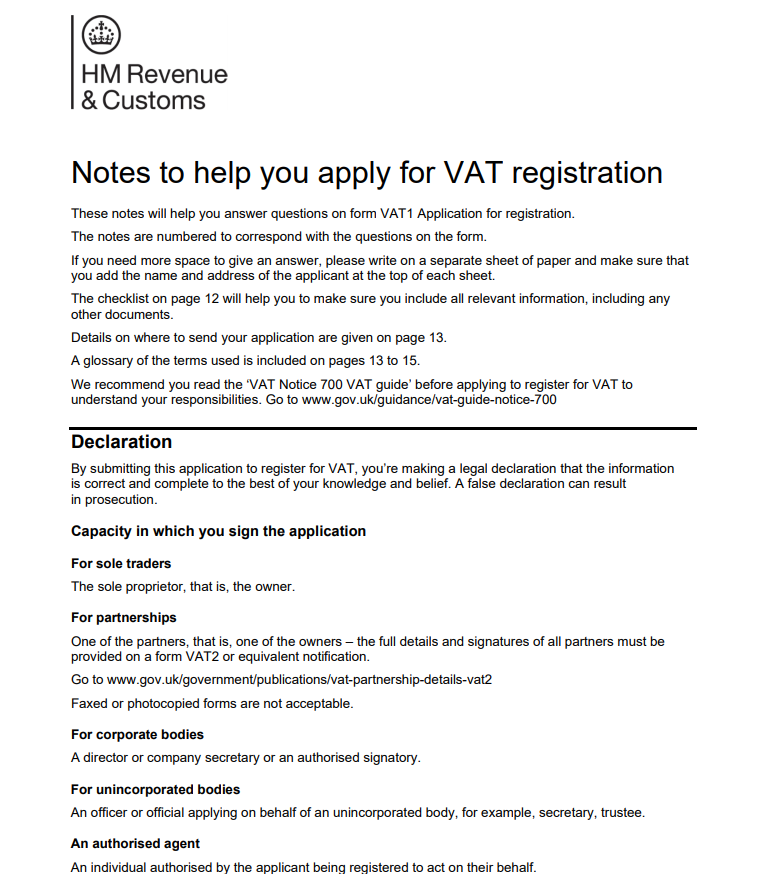
Timelines, Costs and Typical HMRC Checks – At a Glance
Timelines: non-resident cases often take longer than standard UK registrations due to verification and evidence requests (and sometimes security questions).
Costs: HMRC doesn’t charge a fee to register, but your internal admin costs and professional fees can be significant depending on complexity.
HMRC checks: overseas applications commonly trigger questions about:
- supply chain reality (where stock sits, who imports, who sells)
- consistency across documents (names, addresses, dates)
- trading evidence (is the business genuine and active?)
- whether the effective date is correct (especially in NETP scenarios)
Where to Find the Detailed Step-by-Step Registration Guide
Internal link: The Application Process: Documents, Forms, and Submission Steps
Special Cases – E-commerce, Tax Representatives, MTD and Foreign Directors
Non-Resident E-commerce Sellers and Amazon FBA
If you use UK fulfilment (including FBA), stock location becomes one of the strongest VAT triggers. Deemed supplier rules can affect who accounts for VAT on certain sales, but they don’t remove your need to map the full model (imports, stock ownership, mixed channels, digital add-ons).
Internal link: Amazon FBA VAT for Non-Residents: UK Rules for E-commerce
UK Tax Representatives and Agents for Non-Residents
A VAT agent can act on your behalf without being liable for your VAT debts. A tax representative may be jointly liable and can be required by HMRC in higher-risk cases. Understanding the difference matters for both cost and risk management.
Internal link: UK Tax Representative for Non-Residents: Costs & Requirements
Making Tax Digital (MTD), Returns and Import VAT for Overseas Businesses
After registration, overseas businesses must run day-to-day compliance: MTD-compatible digital records, VAT returns, import VAT reconciliation, and (for importers) Postponed VAT Accounting (PVA) as relevant.
Internal link: Compliance & Logistics: Returns, MTD, Imports, and Deregistration
UK Companies with Foreign Directors – A Special VAT Registration Case
If you use a UK company but directors are overseas, VAT registration follows the UK company route — but HMRC may apply enhanced verification. Address, banking, and document legalisation (apostilles) can become practical blockers.
Internal link: UK Companies with Foreign Directors: A Specific VAT Registration Guide
How UK VAT Fits into the Wider Tax and Business Strategy for Non-Residents
VAT vs Corporation Tax vs Personal Tax for Non-Residents
VAT is transactional and supply-driven. Corporation tax is profit-driven. Personal tax depends on residence and duties performed. Overseas founders often run into trouble when they assume one concept (like “non-resident”) automatically answers all three.
Treat VAT as one workstream inside a bigger compliance strategy:
- VAT registration and returns
- corporate governance and company tax position
- director/owner personal tax position
- cross-border taxes (“overseas taxation”) and multi-country reporting
Regulatory and Commercial Considerations Beyond VAT
Overseas businesses should plan for:
- KYC/AML and “fit for purpose” documentation
- operational substance (contracts, fulfilment, staff, decision-making)
- banking access and payment reliability (especially for VAT deadlines and refunds)
- platform requirements (marketplaces can restrict selling if VAT details are missing)
- customer contract terms (VAT clauses, pricing expectations)
Choosing the Right UK VAT Route for Your Business Model
A practical decision framework:
- NETP direct registration is often appropriate where you are clearly an overseas seller making UK taxable supplies.
- UK company trading model can fit where you want UK contracting, UK operational alignment, and potentially smoother local operations — but still requires strong governance and verification readiness.
- Marketplace-only vs mixed channel matters because some sales may be handled differently for VAT, and direct sales can trigger registration even if the marketplace collects VAT on some transactions.
- Role of advisers: the more complex your imports, stockholding, multi-channel sales, or B2C digital services, the more value professional mapping adds.
How This Guide Connects to the Rest of Your VAT Journey
Step 1 – Decide If and When You Need to Register
Internal link: Eligibility & Thresholds: When Must a Non-Resident Register for UK VAT?
Step 2 – Understand the Application Process and Documentation
Internal link: The Application Process: Documents, Forms, and Submission Steps
Step 3 – Consider Whether You Need a Tax Representative or UK Company Structure
Internal links:
- UK Tax Representative for Non-Residents: Costs & Requirements
- UK Companies with Foreign Directors: A Specific VAT Registration Guide
Step 4 – Manage Ongoing Compliance, Returns and Deregistration
Internal link: Compliance & Logistics: Returns, MTD, Imports, and Deregistration
Step 5 – Deep Dives for E-commerce and Digital Sellers
Internal link: Amazon FBA VAT for Non-Residents: UK Rules for E-commerce
FAQs – UK VAT Registration for Non-Residents and Foreign Companies
Do all non-UK residents and foreign companies need to register for UK VAT?
No. It depends on whether you make UK taxable supplies and how the rules apply to your model. However, HMRC states that some overseas businesses must register regardless of turnover if they supply goods or services to the UK (or expect to within the next 30 days).
What is the difference between UK VAT registration for foreign companies and UK-resident businesses?
Overseas businesses may fall under NETP rules and may face earlier registration timing and more HMRC verification. UK-resident businesses typically rely on turnover thresholds and standard processes, although the underlying VAT principles are the same.
Can I register for UK VAT without a UK address or bank account?
Often you can register without a “traditional” physical office, using appropriate correspondence arrangements, but you must present a credible and consistent evidence pack. Banking is frequently a practical issue rather than a formal blocker; the key is reliable payments and clean records for refunds.
How long does UK VAT registration usually take for non-residents?
There’s no single guaranteed timeframe. Non-resident cases commonly take longer than standard UK registrations due to additional checks and evidence requests. Preparation and consistency are the strongest factors you can control.
Do I always need a UK tax representative or agent?
Not always. Many overseas businesses use a VAT agent, and a formal tax representative is typically only required in specific cases or if HMRC requests it based on risk. (See the dedicated guide for when it becomes mandatory.)
Internal link: UK Tax Representative for Non-Residents: Costs & Requirements
Where can I find more detailed step-by-step information?
Use the cluster guides linked throughout this pillar:
- Eligibility & Thresholds: When Must a Non-Resident Register for UK VAT?
- Documents for UK VAT Registration: Checklist for Foreign Companies
- Tax Representatives & Agents: Mandatory Requirements and Costs
- E-commerce & Digital Sellers: VAT Rules for Amazon FBA and Marketplaces
- MTD for VAT & Returns for Non-Residents: UK Compliance Guide
- UK Companies with Foreign Directors: A Specific VAT Registration Guide
External References (Official HMRC)
- HMRC “Register for VAT” overview (thresholds + overseas business note).
- HMRC guidance explaining what an NETP is (VAT Registration Manual).
- HMRC VAT Notice 700/1 (who should register).
How Audit Consulting Group Can Help
UK VAT registration for non-residents is rarely “just a form”. It’s a supply-chain and evidence exercise — especially for marketplaces, UK stockholding, imports, and overseas management.
Audit Consulting Group supports overseas businesses with end-to-end UK VAT registration and ongoing compliance, including:
- eligibility and timing analysis (NETP vs standard threshold logic)
- choosing the right route (overseas company vs UK company structure)
- HMRC-ready evidence packs and document preparation
- registration submission support and HMRC correspondence handling
- post-registration setup: MTD, VAT returns, import VAT/PVA reconciliation, deregistration planning
Audit Consulting Group – Accounting and Tax
+44 7386 212550
info@auditconsultinggroup.co.uk
If you share your business model (where stock is held, who imports, sales channels, B2B/B2C split), we can map the correct VAT route and help you avoid delays, penalties, and platform disruption.