

The UK Beauty Services Economy: Tax, VAT and Cash Flow Risks for Salons, Spas and Wellness Businesses
The UK beauty services economy looks simple from the outside. Hair salons, nail bars, beauty rooms, massage studios, spas and wellness clinics are visible on almost every high street. Demand appears constant. Customers keep booking treatments. New businesses open every year.
But behind that visible activity, the sector is much more complex.
For many salon and wellness business owners, the real challenge is not attracting customers. The real challenge is building a business that remains profitable after rent, labour costs, VAT, payroll, bookkeeping, tax liabilities and seasonal cash-flow pressure are taken into account.
This article examines the UK beauty services economy from a tax, accounting and business-risk perspective. It is written for salon owners, spa operators, beauty therapists, wellness businesses and advisers who want to understand why this sector can look busy on the surface but still create serious financial pressure underneath.
Key Points for Beauty Business Owners
Beauty services are usually labour-intensive, locally competitive and cash-flow sensitive. That means small pricing mistakes can quickly become tax and payroll problems.
The VAT registration threshold is now £90,000 of taxable turnover over a rolling 12-month period, effective from 1 April 2024. This matters because many growing salons and beauty businesses approach the threshold before they realise it.
ONS data for SIC 96.02, covering hairdressing and beauty salons, is based on VAT and/or PAYE registered enterprises, which means very small informal operators may not be fully reflected in the official numbers.
The VAT threshold remained frozen at £85,000 for several years before increasing to £90,000 in 2024. This created pressure for many small consumer-facing businesses as costs and prices increased across the UK economy.
Why the Beauty Sector Is Not One Single Market
 One of the biggest mistakes is treating “beauty services” as one simple industry.
In practice, the sector contains different types of businesses with very different financial profiles:
- Hair salons
- Nail bars
- Lash and brow studios
- Beauty treatment rooms
- Aesthetic and skincare clinics
- Massage businesses
- Spas and wellness centres
- Tanning salons
- Mobile and home-based beauty therapists
A one-chair hairdresser does not operate like a destination spa. A nail bar in a busy city centre does not face the same cost structure as a therapist working from a home studio. A wellness clinic with specialist equipment has different financial risks from a small beauty room renting space inside another premises.
This matters because tax and accounting advice should not be generic. The right structure depends on how the business earns money, how labour is managed, how close turnover is to the VAT threshold, and whether the owner understands their real margins.
The Official Data Problem: Why “Beauty Services” Are Hard to Measure
Official statistics do not always describe the beauty economy in the same way business owners understand it.
The most useful official category is usually SIC 96.02 — hairdressing and other beauty treatment. ONS has published analysis for this category showing count, employment, employees and turnover for VAT and/or PAYE based enterprises in the UK.
This is useful, but it has limits.
It does not fully capture every informal, very small or early-stage beauty operator. A home-based therapist below VAT and PAYE registration levels may not appear in the same way as a salon with employees and registered turnover.
For tax and accounting purposes, however, this is still highly valuable. It shows the part of the beauty economy that is already interacting with formal systems such as VAT, PAYE, payroll and business tax.
That is where many compliance risks begin.
Why Many Beauty Businesses Look Busy but Still Struggle
 A beauty business can have a full diary and still be financially weak.
This is one of the most important points for salon owners to understand.
Being busy does not automatically mean being profitable.
A salon can have:
- Regular bookings
- Loyal customers
- Active social media
- Strong reviews
- Full appointment slots
… and still struggle to pay VAT, corporation tax, rent, staff wages or supplier bills.
The reason is simple: beauty businesses mainly sell time. Once the day is fully booked, there are only a few ways to increase profit:
- Raise prices
- Improve service margins
- Reduce wasted time
- Improve staff productivity
- Control costs
- Manage tax planning properly
If prices are too low, a full diary may only create more exhaustion, not more profit.
Why VAT Is Such a Major Pressure Point for Salons and Beauty Businesses
VAT is one of the biggest financial turning points for many beauty businesses.
The current VAT registration threshold is £90,000 of taxable turnover over a rolling 12-month period. Businesses above that threshold must usually register for VAT.
The problem is that many owners think about turnover in calendar years or tax years. VAT does not work like that. It is based on a rolling 12-month period.
That means a salon can cross the threshold gradually without noticing.
For example, if monthly taxable turnover rises from £6,000 to £8,000, the business may move towards VAT registration much faster than the owner expects.
The danger is not only the VAT itself. The danger is late awareness.
Late VAT registration can create:
- Unexpected backdated liability
- Cash-flow pressure
- Penalties or interest
- Pricing problems
- Stress with HMRC
- Difficulty explaining price changes to customers
For consumer-facing businesses, VAT is especially sensitive because many customers cannot recover VAT. If a salon increases prices by 20%, some customers may reduce visit frequency or switch to cheaper providers. If the salon absorbs VAT instead, profit margins can fall sharply.
This is why VAT planning must happen before the threshold is crossed — not after.
Why the £90,000 VAT Threshold Changes Business Behaviour
 The VAT threshold is not just a technical rule. It affects how small businesses behave.
For beauty businesses, this creates a psychological cliff edge.
Owners may avoid growth because they fear VAT registration. They may reduce hours, delay price increases or avoid taking on more customers. In some cases, they may not understand how close they are to the threshold until it is too late.
This is particularly relevant for salons and beauty businesses because they often have:
- Low-to-medium margins
- High labour costs
- Price-sensitive customers
- Limited admin time
- Irregular cash reserves
VAT should not stop a good business from growing. But it must be planned properly.
The Biggest Accounting Mistake: Treating Bookkeeping as Admin
Many salon and beauty business owners see bookkeeping as something they do for HMRC or their accountant.
That is a mistake.
Good bookkeeping is not just compliance. It is a management tool.
A beauty business should be able to see:
- Monthly turnover
- Rolling 12-month taxable turnover
- Gross profit by service
- Staff cost as a percentage of revenue
- Rent and fixed costs
- Cash available for tax
- Upcoming VAT, PAYE and corporation tax liabilities
- Service profitability
Without this visibility, the owner is effectively running the business blind.
This is where many problems begin. Tax does not usually destroy a beauty business by itself. Tax exposes the financial weaknesses that were already there.
Payroll, Self-Employment and Chair Renting Risks
Labour is another major risk area.
Many beauty businesses use a mixture of:
- Employees
- Self-employed contractors
- Chair renters
- Room renters
- Freelance therapists
This can be commercially useful, but it must be structured correctly.
The danger is when the practical arrangement does not match the legal or tax reality.
For example, if someone is described as self-employed but the business controls their hours, prices, booking system, uniform, customer relationship and working conditions, the arrangement may create employment status and tax risk.
Beauty businesses often choose flexible labour models because they reduce immediate cash-flow pressure. But if the arrangement is unclear, the risk may appear later through disputes, HMRC questions, backdated liabilities or payroll corrections.
A flexible model is not automatically wrong. But it must be documented properly and reviewed regularly.
Why Pricing Is Often the Root Problem
 Many salon owners blame tax, VAT or payroll for financial pressure.
In reality, the root issue is often pricing.
If prices do not cover the true cost of delivering the service, every other obligation becomes painful.
The true cost of a treatment is not just product cost and staff time. It may include:
- Booking gaps
- Cleaning time
- Admin time
- Employer costs
- Rent
- Utilities
- Card fees
- Software costs
- Training
- Cancellations
- Tax reserves
- Owner management time
When these are not included, the service may look profitable but actually drain cash.
This is why beauty businesses should review pricing at least once a year — and more often if wages, rent, product costs or VAT exposure change.
Why Beauty Businesses Need Cash-Flow Forecasting
Cash flow is often the difference between survival and closure.
Beauty businesses usually receive income frequently, sometimes daily. That can create a false sense of security. Money is coming in, so the business feels healthy.
But tax liabilities build silently in the background.
A salon may need to prepare for:
- VAT payments
- PAYE and National Insurance
- Corporation tax
- Self Assessment
- Rent
- Supplier payments
- Loan repayments
- Insurance
- Software subscriptions
- Staff holiday pay
Without a forecast, owners can mistake available cash for spare cash.
That is one of the most dangerous mistakes in the sector.
A good cash-flow forecast should show what money is needed for tax before the owner decides what can be spent, withdrawn or reinvested.
Practical Checklist for Salon and Beauty Business Owners
Every salon, spa or beauty business should review the following:
- Do you know your rolling 12-month taxable turnover?
- Are you approaching the £90,000 VAT registration threshold?
- Are your prices calculated from real costs, not competitor prices?
- Do you know which services are most profitable?
- Do you separate money for VAT, PAYE and corporation tax?
- Are staff, contractors and chair renters classified correctly?
- Do you have written agreements for self-employed or rental arrangements?
- Do you review cash flow monthly?
- Do you know how much tax is building up before the bill arrives?
- Do you speak to an accountant before making major growth decisions?
If the answer to several of these questions is “no”, the business may already have hidden risk.
Common Tax and Accounting Mistakes in Beauty Businesses
Many financial problems in the beauty sector are not caused by one major mistake. They are caused by small issues that build up slowly over time.
Some of the most common problems include:
- Late VAT registration
- Incorrect treatment of self-employed workers
- Mixing personal and business spending
- Poor record keeping
- Missing receipts and incomplete bookkeeping
- Taking too much money from the business too early
- No cash reserved for tax liabilities
- Underpricing services for long periods
- Delayed payroll submissions
- Incorrect expense claims
- No forecasting for seasonal slow periods
These problems often appear together.
For example, a salon may keep prices low to remain competitive, which reduces margins. The reduced margin creates cash-flow pressure. The owner delays bookkeeping because daily operations become overwhelming. VAT monitoring slips behind. Payroll becomes reactive instead of controlled. Eventually, HMRC letters arrive at the same time cash reserves disappear.
The issue rarely begins with tax. Tax simply exposes weak financial systems already inside the business.
Why Seasonal Cash Flow Creates Financial Pressure
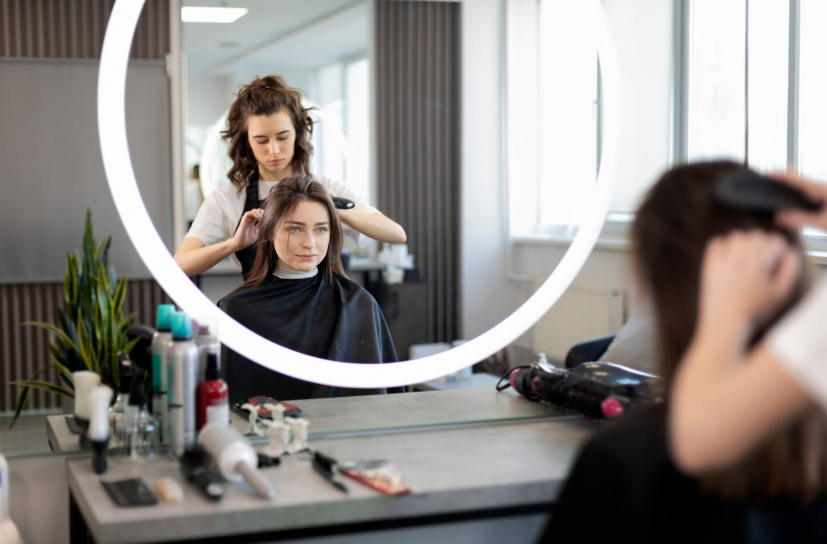 Beauty businesses are highly seasonal, even when owners believe demand is stable.
Many salons and wellness businesses experience strong periods around:
- Christmas and New Year
- Weddings and summer events
- Holiday seasons
- Payday cycles
- Promotional periods
But quieter periods often follow:
- January slowdowns after holiday spending
- Reduced appointments during economic uncertainty
- Seasonal dips in discretionary spending
- Lower demand during poor weather periods
The danger is when business owners make long-term financial decisions based on peak periods instead of average performance.
A business that feels highly profitable in December may struggle significantly by February if reserves are weak and fixed costs remain high.
This is why forecasting matters so much in beauty services.
Why Growth Can Actually Increase Risk
Many beauty businesses assume growth automatically improves financial stability.
In practice, growth can increase risk if systems are weak.
For example, growth may mean:
- More payroll responsibilities
- Higher VAT exposure
- Larger premises
- Increased rent and utilities
- More software and operational costs
- Greater payroll tax liabilities
- More administration and reporting obligations
If pricing and financial control do not improve at the same pace as growth, the business can become less profitable even while turnover rises.
This is one of the most common hidden problems in salons and wellness businesses.
Realistic Example: How VAT Problems Develop
Consider a growing beauty salon:
The business starts with turnover around £55,000 annually. Over time, demand increases due to social media marketing and strong customer retention. Monthly revenue gradually rises.
The owner focuses on bookings, staffing and customer service.
Meanwhile:
- Turnover moves towards the VAT threshold
- Prices remain unchanged despite rising costs
- Cash reserves remain limited
- VAT monitoring is inconsistent
Eventually the business exceeds the VAT registration threshold, but the owner notices several months late.
At this point, the salon may face:
- Backdated VAT liability
- Immediate cash-flow pressure
- Reduced margins if VAT is absorbed
- Customer resistance to price increases
- Stress and uncertainty around compliance
This scenario is extremely common in labour-intensive consumer-facing businesses.
Why Informal Financial Management Becomes Dangerous
Many small beauty businesses begin informally.
Owners may initially manage finances using:
- Personal bank accounts
- Manual spreadsheets
- Basic appointment systems
- Minimal forecasting
This can work temporarily at a very small scale.
But once turnover, staffing and tax obligations increase, informal financial management becomes dangerous.
A growing business requires:
- Clear bookkeeping systems
- Separate business finances
- VAT monitoring
- Payroll organisation
- Regular management reporting
- Cash-flow forecasting
- Structured tax planning
Without these systems, growth creates confusion instead of stability.
Why Chair Renting and Self-Employment Require Careful Review
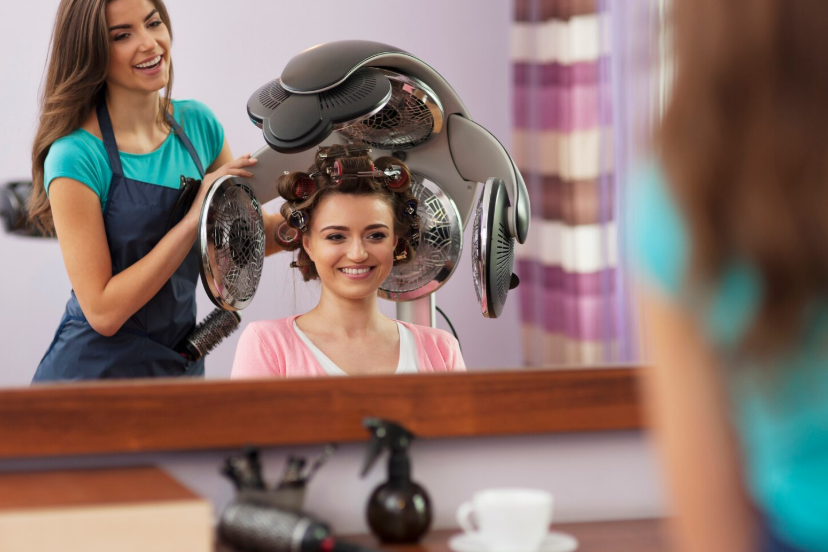 Chair renting and freelance arrangements are common throughout the beauty industry.
However, many businesses fail to review whether these structures genuinely reflect operational reality.
Problems may appear if the salon owner controls:
- Working hours
- Service pricing
- Customer relationships
- Booking systems
- Uniforms or branding
- Availability requirements
If a worker appears independent on paper but behaves like an employee in practice, tax and employment risks may arise later.
This is why agreements should always reflect how the business actually operates — not just what feels commercially convenient.
Why Strong Financial Visibility Changes Everything
The strongest salon and wellness businesses are not always the busiest businesses.
Very often, they are simply the businesses with better visibility.
Successful owners usually understand:
- Which services generate real profit
- Which staff structures are sustainable
- When VAT registration pressure is approaching
- How much cash is truly available
- Which months create financial risk
- What tax liabilities are building in the background
This visibility allows decisions to happen early instead of during crisis.
That difference is enormous.
What the Strongest Beauty Businesses Usually Do Differently
Long-term successful salon and wellness businesses tend to share similar habits.
They usually:
- Review pricing regularly
- Separate tax money from operating cash
- Monitor turnover monthly
- Use structured bookkeeping systems
- Forecast cash flow in advance
- Speak to advisers early
- Document labour arrangements properly
- Focus on margins, not just bookings
- Understand service profitability
- Build reserves during strong trading periods
Most importantly, they treat financial management as part of the business itself — not as something secondary.
Why Professional Advice Matters Earlier Than Most Owners Think
Many salon and wellness business owners wait too long before speaking to accountants or advisers.
Usually this happens because:
- The owner is busy with daily operations
- Financial issues seem temporary
- Tax feels overwhelming
- The business still appears successful externally
Unfortunately, the earlier financial issues are identified, the easier and cheaper they are to resolve.
Professional support is most valuable before problems become urgent.
This is especially important when businesses are:
- Approaching VAT registration
- Expanding premises
- Hiring staff
- Introducing payroll
- Changing labour structures
- Increasing prices
- Opening additional locations
Early planning creates options. Delayed planning creates pressure.
How Audit Consulting Group Supports Beauty and Wellness Businesses
 Audit Consulting Group supports salons, beauty businesses, spas and wellness operators across the UK with practical accounting, tax and compliance support.
Our services include:
- Bookkeeping and management reporting
- VAT registration and VAT advice
- Payroll services and PAYE support
- Corporation tax planning
- Self Assessment support
- Cash-flow forecasting
- Business structure advice
- Companies House filing support
- Financial reporting and compliance assistance
We understand that beauty businesses operate differently from many other industries. Labour pressure, pricing sensitivity, seasonal cash flow and VAT exposure create unique challenges that require practical, industry-aware support.
Example Business Scenario
A London-based beauty salon approached ACG after experiencing rapid growth over a two-year period.
The business had:
- Strong customer demand
- Multiple treatment rooms
- Growing staff numbers
- Increasing monthly turnover
However, several risks had developed:
- VAT threshold monitoring was inconsistent
- Payroll processes were fragmented
- Cash reserves for tax were insufficient
- Pricing had not increased despite rising costs
After restructuring bookkeeping processes, introducing regular turnover monitoring and reviewing pricing strategy, the business improved financial visibility significantly and reduced cash-flow pressure linked to VAT and payroll obligations.
Final Thoughts
The UK beauty services economy continues to grow and evolve, but the sector remains financially demanding.
Many businesses appear successful externally while quietly struggling with:
- Thin margins
- VAT pressure
- Payroll complexity
- Weak cash reserves
- Administrative overload
The businesses most likely to survive long term are usually not the businesses working the hardest.
They are the businesses with:
- Better financial systems
- Stronger pricing discipline
- Clearer labour structures
- Earlier professional advice
- Better cash-flow visibility
Beauty businesses do not fail because owners lack effort.
Very often, they fail because financial pressure builds silently until there is no room left to react.
Frequently Asked Questions
When must a beauty business register for VAT in the UK?
A business usually needs to register for VAT when taxable turnover exceeds £90,000 over a rolling 12-month period.
Can salons use self-employed staff legally?
Yes, but the arrangement must reflect genuine self-employment. If the salon controls hours, pricing and customer relationships, employment status risks may arise.
Why do busy salons still struggle financially?
Many salons focus on bookings and turnover without fully understanding margins, tax liabilities, labour costs and cash flow.
Is chair renting better than payroll?
Not necessarily. Each model has advantages and risks. The important factor is whether the structure is commercially and legally correct for the business.
Why is VAT such a challenge for beauty businesses?
Beauty services are usually consumer-facing, meaning customers cannot recover VAT. This can create pricing pressure and margin reduction.
How often should beauty businesses review prices?
At minimum once a year, but ideally whenever labour costs, rent, product costs or VAT exposure change significantly.
Speak to Audit Consulting Group
If you operate a salon, spa, beauty clinic or wellness business and want clearer financial visibility, structured bookkeeping support or guidance around VAT, payroll and tax planning, Audit Consulting Group can help.
Professional financial management is not only about compliance. It is about building a business that remains stable, scalable and sustainable long term.